
US tradespeople can immigrate through Express Entry’s Federal Skilled Trades Program (FSTP). You need two years of full-time trade experience in the last five, modest language scores (CLB 5 speaking and listening, CLB 4 reading and writing), and either a Canadian job offer or a provincial certificate of qualification. A US journeyman licence doesn’t transfer automatically. Most trades need you to pass a provincial certification exam.
Canada needs construction and industrial trades for its housing and infrastructure push, and Express Entry now runs dedicated Trades draws. See also our general guide to Canada PR options for US citizens.
Table of Contents
ToggleFederal Skilled Trades Program: the requirements
| Requirement | FSTP standard |
| Work experience | At least 2 years full-time (or equivalent) in an eligible trade within the last 5 years |
| Language | CLB 5 speaking and listening; CLB 4 reading and writing |
| Job offer or certificate | A full-time Canadian job offer of at least 1 year, OR a certificate of qualification from a Canadian province or territory |
| Education | No minimum, and no ECA required for eligibility |
| Proof of funds | Required unless you are authorized to work in Canada and have a job offer |
Eligible trades fall under NOC major groups 72, 73, 82, 83, 92 and 93, with some exclusions. Check that your trade’s code qualifies; see finding your NOC code.
Your US licence vs a Canadian certificate
Trades are regulated by provinces. In compulsory trades, such as electrician in most provinces, you need a provincial licence to work. To get one as an experienced US journeyperson, you typically:
- Apply for a trade equivalency assessment. Submit documented hours and experience to the provincial apprenticeship or trades authority (for example, Skilled Trades Ontario).
- Write the certification exam. For Red Seal trades, this is usually the interprovincial Red Seal exam.
- Receive your certificate of qualification. This licenses you to work, and it can meet the FSTP certificate requirement without a job offer.
A certificate of qualification can also add CRS points when combined with your language scores. See how a certificate of qualification can add 50 CRS points.
The Trades Express Entry category
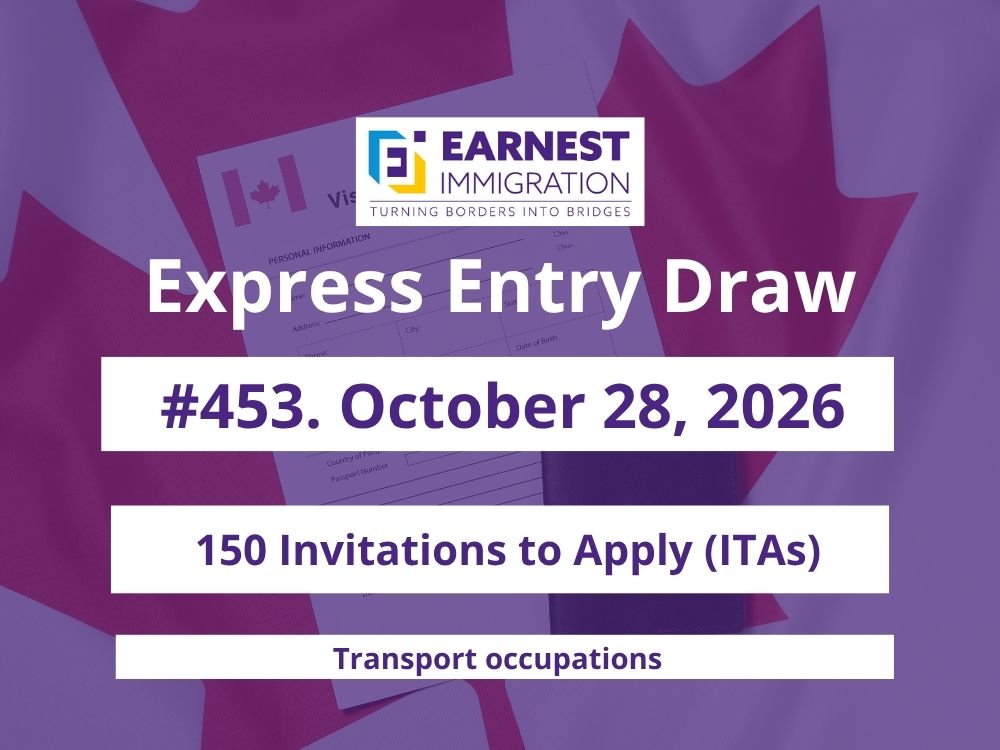
IRCC runs category-based Trades draws. On April 2, 2026, it invited 3,000 trades candidates at a CRS of 477, the largest Trades round to date. It was well below the CEC cut-offs above 500 at the time. The category list changes: cooks and chefs were removed in February 2026. Read our Trades draw breakdown.
Work permit first, or straight to PR?
| Route | When it fits |
| Express Entry from the US (FSTP + Trades category) | You have a certificate of qualification or a job offer, and a competitive CRS |
| Employer-sponsored work permit (often LMIA) | A Canadian employer wants you now; Canadian experience then strengthens PR |
| Provincial trades streams | Several provinces prioritise construction trades. See PNPs for US residents |
Most trades aren’t on the CUSMA professions list, so US tradespeople usually need an LMIA-based or other employer-specific permit to work before PR. See work permits & LMIA.
Frequently asked questions
Does my US journeyman licence work in Canada?
Not automatically. You usually need a provincial certificate of qualification, often by passing an exam after an equivalency assessment.
Do I need a job offer for Federal Skilled Trades?
No, if you hold a Canadian provincial or territorial certificate of qualification in your trade.
What language score do tradespeople need?
CLB 5 for speaking and listening, and CLB 4 for reading and writing. Higher scores add CRS points.
Does apprenticeship time count?
Paid apprenticeship work generally counts if it matches the NOC duties. Classroom time doesn’t.
Are Trades draws regular?
No. They are periodic, so stay in the pool with the correct NOC code.