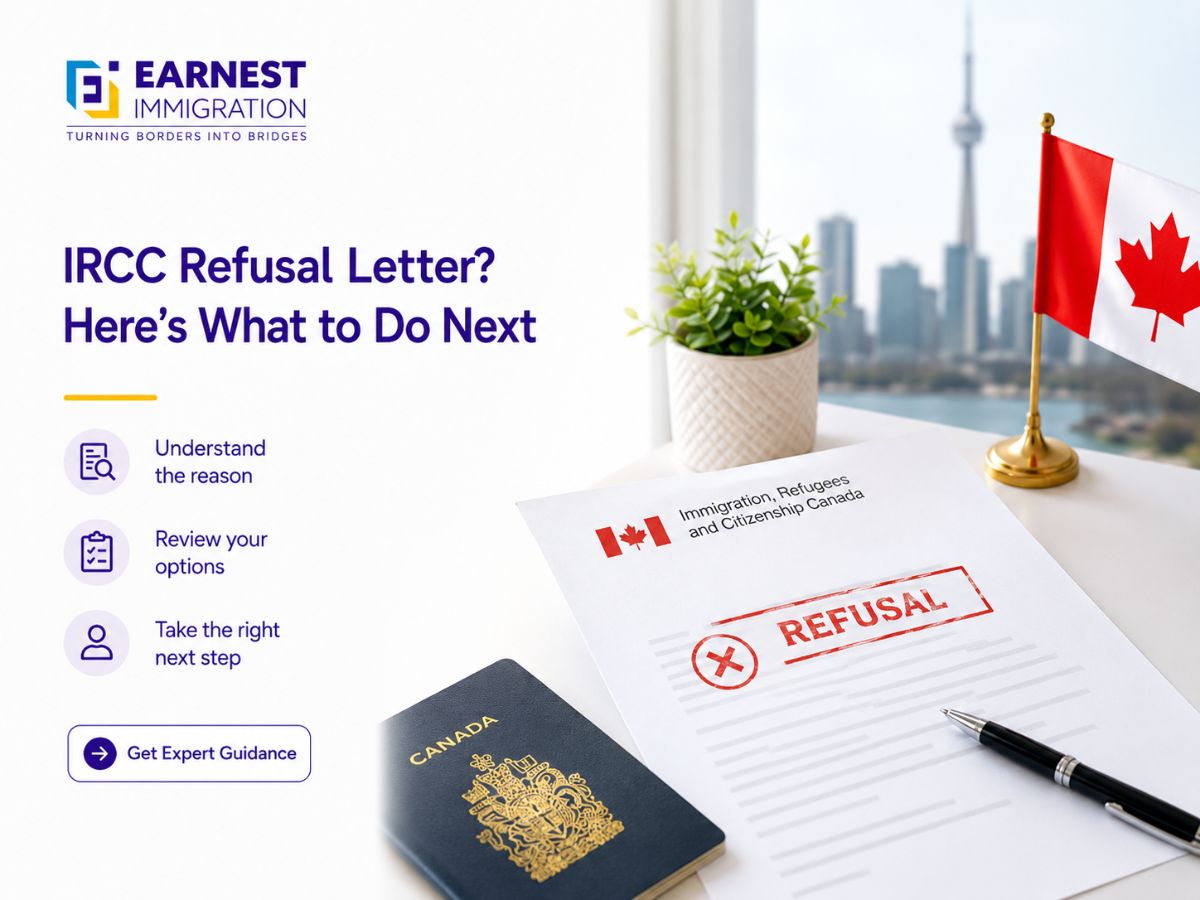
Receiving an Immigration, Refugees and Citizenship Canada (IRCC) refusal letter can be stressful, but it does not always mean your immigration journey is over. The next steps depend on what your refusal letter says, and acting quickly is essential to protect your legal status in Canada.
In this guide, we’ll explain the three most common situations after receiving an IRCC refusal letter and what they could mean for you.
Scenario 1: Your Refusal Letter Gives You 90 Days to Restore Your Status
In some cases, IRCC may state that you have 90 days to restore your status.
This means you may be eligible to:
- Restore the immigration status you previously held (such as student or worker), if eligible.
- Apply to restore your status as a visitor if restoration to your previous status is not possible.
The 90-day restoration period is extremely important. Missing this deadline can significantly limit your options.
Remember: Restoration is not automatic. You must submit the appropriate application and meet the eligibility requirements within the allowed timeframe.
Scenario 2: Your Letter Says You Must Leave Canada Immediately
Some refusal letters clearly state that you must leave Canada immediately.
If this happens:
- You are expected to depart Canada without delay.
- In many cases, you have 30 days before the removal order becomes a deportation order if you do not comply with the requirements.
Failing to leave when required may have serious immigration consequences and could affect future applications to Canada.
If you receive this type of refusal, seek professional advice as soon as possible to understand your available options.
Scenario 3: The Refusal Letter Is Silent About Restoration
Sometimes, a refusal letter does not mention restoration or departure requirements.
In these situations:
- Restoration may still be possible in certain circumstances.
- However, approval is entirely at the discretion of the IRCC officer reviewing your application.
Because every case is different, it is important to have your refusal letter reviewed before deciding your next step.
Why You Should Act Quickly
After receiving an IRCC refusal letter:
- Read the letter carefully.
- Do not ignore any deadlines.
- Understand whether restoration is available.
- Seek professional guidance before taking further action.
Delays can reduce your options and may negatively impact your future immigration plans.
How Earnest Immigration Can Help
Every refusal letter is unique, and the correct course of action depends on your individual circumstances.
At Earnest Immigration, our experienced team can:
- Review your IRCC refusal letter.
- Explain your legal options.
- Assess your eligibility for restoration.
- Guide you through the appropriate immigration process.
- Help you prepare a strong application where possible.
Taking the right step early can make a significant difference in your immigration journey.
Table of Contents
ToggleFrequently Asked Questions
Does an IRCC refusal mean I must leave Canada immediately?
Not always. Some refusal letters allow a 90-day restoration period, while others require you to leave Canada. The instructions in your refusal letter determine your next steps.
What is restoration of status?
Restoration allows certain temporary residents who have lost their status to apply to regain legal status within the prescribed time, provided they meet IRCC’s eligibility requirements.
Can I apply for restoration if my refusal letter doesn’t mention it?
Possibly. In some cases, restoration may still be considered, but approval is discretionary and depends on your circumstances and the reviewing officer.
Should I wait before taking action?
No. Immigration deadlines are strict. It is best to review your refusal letter immediately and seek professional advice as soon as possible.
Need Help Understanding Your IRCC Refusal Letter?
If you’ve recently received an IRCC refusal letter and aren’t sure what your next step should be, Earnest Immigration is here to help.
Our team can review your case, explain your available options, and guide you through the appropriate immigration process with confidence.
Disclaimer: This article is for general informational purposes only and should not be considered legal or immigration advice. Every immigration case is unique, and outcomes depend on individual circumstances and applicable Canadian immigration laws and policies. Consult a qualified immigration professional for advice specific to your situation.