
The Francophone Mobility work permit requires NCLC 5 in speaking and listening only. NCLC 7 was the rule before June 2023 and applies now to Express Entry French draws.
Last updated: July 2026.
Canada continues to promote Francophone immigration outside Quebec, but online discussions keep creating confusion around the Francophone Mobility Program. A persistent rumour in immigration forums and on social media claims that applicants now need NCLC 7 instead of NCLC 5 to qualify for a Francophone work permit.
The rumour is wrong – but it is not random. It has a specific origin that most articles on this topic never explain, and understanding that origin is the fastest way to stop second-guessing your own eligibility.
This guide by Earnest Immigration and Citizenship Services Inc. clarifies the current requirement, explains where the NCLC 7 figure actually comes from, and sets out why higher French scores still matter enormously in 2026 even though they are not required for the permit.
Table of Contents
Toggle1. What Is the Francophone Mobility Program?
The Francophone Mobility Program is a federal initiative under the International Mobility Program (IMP) that allows French-speaking foreign nationals to obtain an LMIA-exempt work permit to work outside Quebec. It operates under exemption code C16, sometimes called Mobilité francophone.
It was designed to:
- Promote Francophone minority communities outside Quebec
- Support bilingual workforce development
- Strengthen economic immigration pathways
- Address labour shortages across Canada
Unlike most employer-specific work permits, no Labour Market Impact Assessment is required. The employer submits an offer of employment through the IRCC Employer Portal under code C16 and pays the compliance fee – a process measured in days rather than the months an LMIA can take.
One Point That Surprises Almost Everyone
The language of work does not have to be French. You must demonstrate French-language ability; you do not have to use French on the job. A qualifying applicant can spend the entire workday operating in English and still be fully eligible, provided the position is outside Quebec.
This single fact widens the programme far beyond what most applicants assume, and it is regularly missed.
If you are exploring work permit pathways generally, our guide to Canadian work permits and LMIA options explains employer-specific and LMIA-exempt routes in depth.
2. The Rumour: Is NCLC 7 Now Required?
Applicants keep asking the same question:
“Has Canada increased the language requirement from NCLC 5 to NCLC 7?”
The short answer is no. For the Francophone Mobility work permit, the operating standard remains NCLC 5 in speaking and listening. There has been no official change raising it to NCLC 7 for this stream.
Where the Rumour Actually Comes From
Here is the part most articles leave out. Before June 15, 2023, the Francophone Mobility Program genuinely did require NCLC 7 or higher. The programme was also restricted to high-skilled occupations in TEER categories 0, 1, 2 and 3.
On June 15, 2023, IRCC expanded the programme substantially:
| Before June 15, 2023 | Since June 15, 2023 | |
| French requirement | NCLC 7 or higher | NCLC 5 in speaking and listening |
| Eligible occupations | TEER 0, 1, 2, 3 only | All TEER 0–5, except primary agriculture in TEER 4 and 5 |
So the NCLC 7 figure is not invented. It is a real rule that people are still repeating three years after it was replaced – often in good faith, sometimes by advisers working from outdated notes, and occasionally by sources that have simply never been updated.
Two other genuine sources of confusion compound it:
- Express Entry’s French-language proficiency category requires NCLC 7 in all four abilities. This is a permanent residence pathway, not a work permit rule.
- Some Provincial Nominee Program streams for French-speaking candidates use NCLC 7 as their baseline.
Both are real NCLC 7 requirements. Neither applies to the C16 work permit.
3. Understanding NCLC 5 vs NCLC 7
The Niveaux de compétence linguistique canadiens (NCLC) are the French-language equivalent of the Canadian Language Benchmarks, running from 1 to 12.
| Level | Where it sits | What it looks like in practice |
| NCLC 5 | Lower end of the intermediate band | You can handle everyday conversation and routine workplace exchanges in French |
| NCLC 7 | Upper end of the intermediate band, roughly CEFR B2 | You can sustain more complex discussion, follow detailed instructions and handle abstract topics |
For the Francophone Mobility stream:
- You must demonstrate NCLC 5 in speaking and listening
- Reading and writing are not assessed for this permit
- Accepted tests are TEF Canada and TCF Canada
- Results must be valid at the time of application
A Nuance Worth Knowing: There Is No Hard Regulatory Minimum
This is subtle but it matters. The regulations describe the applicant as needing to be habitually French-speaking. They do not hard-code a test score.
NCLC 5 is the operational benchmark officers apply, and a TEF Canada or TCF Canada result at NCLC 5 or above is the cleanest possible evidence. But because the underlying test is about habitual use rather than a number, a bare NCLC 5 result with nothing else supporting it is not automatically sufficient. Applicants have been refused holding valid NCLC 5 scores where nothing else in their history – education, residence, employment – showed any relationship with French.
We cover that dynamic in detail in our guide to Francophone Mobility work permit refusals, which is essential reading if your French history is thin outside the test result.
4. Who Qualifies for the Francophone Work Permit?
To qualify under current rules, an applicant must:
- Intend to work outside Quebec. A Quebec work location makes C16 inapplicable – Quebec runs its own parallel system.
- Demonstrate NCLC 5 in speaking and listening, supported by objective evidence.
- Hold a genuine job offer from a Canadian employer.
- Have the employer submit the offer through the IRCC Employer Portal under code C16 and pay the employer compliance fee. Selecting the wrong exemption code invalidates the exemption.
- Hold a position in any NOC TEER category 0 through 5, with the single exception of primary agriculture occupations in TEER 4 and 5.
That last point deserves emphasis because it is where outdated guidance does the most damage. Cooks, drivers, warehouse workers, administrative assistants, childcare workers and skilled tradespeople all qualify. The programme has not been limited to management and professional roles since June 2023.
What It Costs
| Item | Amount (CAD) | Paid by |
| Work permit processing fee | $155 | Applicant |
| Biometrics | $85 per person, $170 family maximum | Applicant |
| Employer compliance fee (Employer Portal) | $230 | Employer |
Confirm current amounts on IRCC’s fee schedule before paying.
It Is a Closed Work Permit
C16 is employer-specific. The permit is tied to the employer and the role named in the offer of employment. If you change employers, or move to a materially different role, you need a new work permit application – your new employer must submit a fresh offer through the Employer Portal under C16 and pay the $230 fee again.
This is a common and expensive surprise. Plan employment changes around the permit, not the other way round.
5. Why the Confusion About NCLC 7 Persists
Beyond the pre-2023 rule, three things keep the rumour alive:
A. Express Entry French category-based draws. These require NCLC 7 in all four abilities and receive enormous attention – far more than the work permit does. It is easy for a reader to absorb “NCLC 7” and “French” together without registering which programme it attaches to.
B. Provincial Nominee Programs. Several francophone PNP streams use NCLC 7 as a baseline for permanent residence pathways.
C. Misread policy announcements. Canada has raised its Francophone immigration targets repeatedly. Target changes get reported alongside language benchmarks, and the two get conflated.
The underlying pattern is that almost every high-profile French-related immigration announcement in recent years has concerned permanent residence, where NCLC 7 genuinely is the threshold. The work permit sits quietly underneath at NCLC 5.
6. Benefits of the Francophone Mobility Program
This pathway offers real advantages:
- LMIA exemption – no labour market test, no recruitment advertising requirement
- Faster employer onboarding – the exemption saves months compared with an LMIA-based hire
- Open to all skill levels – TEER 0 through 5, with the primary agriculture exception
- Low cost relative to alternatives – $155 for the applicant, $230 for the employer
- Builds Canadian work experience that supports later permanent residence applications
- Supports Francophone economic immigration, which is a sustained federal priority
For many candidates it becomes a stepping stone toward permanent residence and, eventually, Canadian citizenship.
One Correction Worth Making Plainly
A Francophone Mobility work permit does not add points to your CRS score.
On March 25, 2025, IRCC removed arranged employment points from the Comprehensive Ranking System. The removal applied to both LMIA-backed job offers and LMIA-exempt closed work permits like C16, and the points have not been reinstated.
What does raise your CRS is the Canadian work experience you accumulate while holding the permit – and that only begins to register once you reach twelve months. The permit is the vehicle; the experience is the value. If you have seen this programme described as boosting your CRS score directly, that description has been out of date for more than a year.
7. Strategic Immigration Planning for Francophone Candidates
NCLC 5 gets you the work permit. NCLC 7 is where the permanent residence value sits – and in 2026 the gap between the two has never been more consequential.
The Numbers Behind the Advice
Express Entry’s French-language proficiency category has been the most accessible federal pathway in the system:
- Eight French-language rounds in 2026, issuing roughly 40,500 invitations
- Cut-offs ranging from 393 to 420, with the most recent round on July 22, 2026 issuing 5,000 invitations at CRS 399
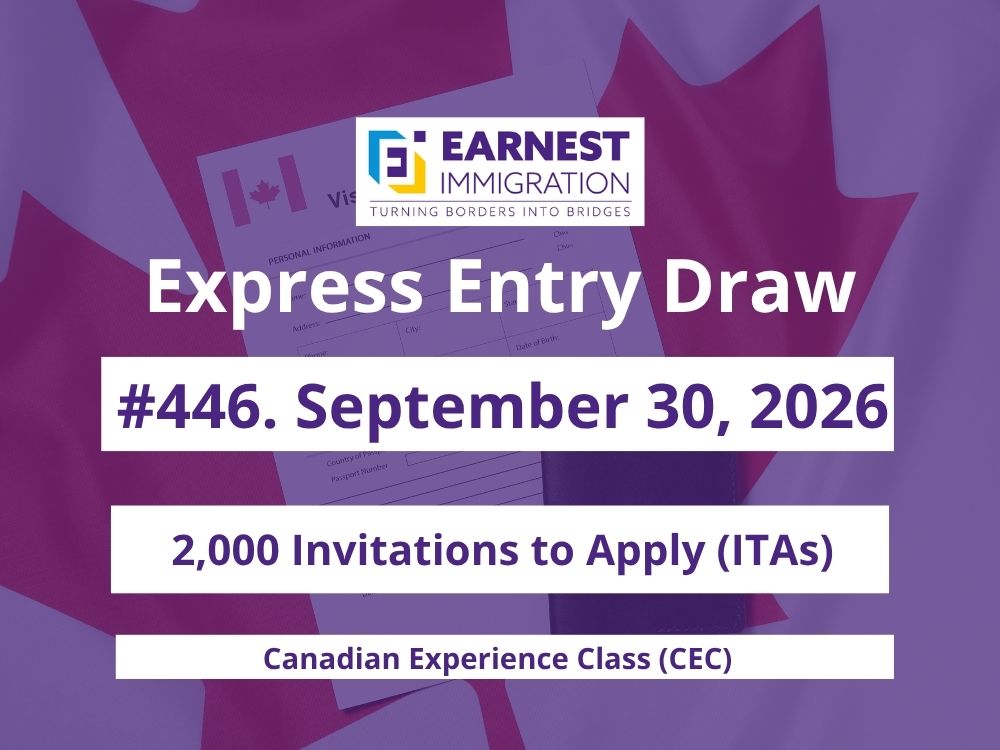
- By comparison, the Canadian Experience Class round the day before cleared at 516
That is a gap of well over 100 points, available to any occupation, on the strength of language alone.
The Two Places French Earns You Points
- Additional CRS points. With NCLC 7 or higher in all four French abilities: 25 points if your English is CLB 4 or lower (or you took no English test), and 50 points if your English is CLB 5 or higher across all four abilities.
- Second official language points in the core human capital section, earned separately.
Federal Commitment Is Not Slowing
The 2026–2028 Immigration Levels Plan sets French-speaking permanent resident admissions outside Quebec at 9% of total admissions in 2026 (30,267 people), rising to 9.5% in 2027 and 10.5% in 2028. This is a rising, funded commitment rather than a one-off.
If you are working toward NCLC 7, see our guide on learning French to improve your CRS score and our overview of French proficiency in the Express Entry system.
Don’t Overlook the Francophone Community Immigration Pilot
The FCIP is a permanent residence pathway for French-speaking workers settling in designated Francophone communities outside Quebec. It can run alongside or after a C16 work permit, and its language threshold is more accessible than the Express Entry French category. Our guide to the FCIP and NCLC 5 French PR route covers who it fits.
A Watch Item
IRCC has opened a public consultation on Comprehensive Ranking System reforms, including whether the additional French-language points should be changed or removed on the reasoning that category-based selection already targets French speakers. This is a consultation, not an enacted rule, and as of July 2026 the 25/50-point structure stands. It is worth monitoring, because if it lands it changes the arithmetic above.
8. Final Verdict: NCLC 5 Is Still the Requirement
- The Francophone Mobility work permit requires NCLC 5 in speaking and listening – reading and writing are not assessed
- NCLC 7 was the rule before June 15, 2023. It is not the rule now, and anyone quoting it is working from pre-2023 guidance
- NCLC 7 in all four abilities is required for Express Entry’s French-language category and several francophone PNP streams – permanent residence, not the work permit
- Higher scores are not mandatory for the permit, but they are the highest-value accessible lever in the federal PR system in 2026
If you see online claims suggesting otherwise, check the date on the source before you act on it. Most NCLC 7 claims about this programme trace back to material written before mid-2023.
Frequently Asked Questions
Does the Francophone Mobility work permit require NCLC 5 or NCLC 7?
NCLC 5 in speaking and listening. NCLC 7 was the requirement before June 15, 2023, which is why the higher figure still circulates. Reading and writing are not assessed for this permit.
Which tests are accepted?
TEF Canada and TCF Canada. Results must be valid at the time of application.
Do I have to work in French?
No. You must demonstrate French-language ability, but the language of work does not have to be French. You can work entirely in English and still qualify, provided the position is outside Quebec.
What jobs qualify?
Any NOC TEER category from 0 to 5, except primary agriculture occupations in TEER 4 and 5. Since June 2023 the programme is no longer limited to management and professional roles.
Does a C16 work permit increase my CRS score?
No. Arranged employment points were removed from the CRS on March 25, 2025, including for LMIA-exempt closed work permits. What raises your CRS is the Canadian work experience you build while holding the permit, which begins to count at twelve months.
Can I change employers on a C16 permit?
Not without a new work permit. C16 is employer-specific. A new employer must submit a fresh offer of employment through the IRCC Employer Portal under code C16 and pay the $230 compliance fee again.
Is a valid NCLC 5 test result enough on its own?
Not always. The underlying standard is habitual French use, not a score. A test result with no supporting French-language history – education, residence or employment – carries real refusal risk. Our guide to Francophone Mobility refusals explains what officers are looking for.
Does the work permit lead directly to permanent residence?
No. C16 is a temporary, closed work permit with no built-in PR pathway. Permanent residence is pursued separately – most commonly through Express Entry’s French-language category at NCLC 7, the Canadian Experience Class after twelve months of Canadian work, a provincial nominee stream, or the FCIP.
How Earnest Immigration Can Help
At Earnest Immigration and Citizenship Services Inc., our RCIC-licensed Regulated Canadian Immigration Consultants:
- Assess your French-language evidence against what officers are currently expecting, not just against the NCLC 5 threshold
- Advise on TEF and TCF preparation strategy, including whether NCLC 7 is realistic for your timeline
- Review the employer’s Employer Portal submission before it is filed, including the exemption code, work location and NOC
- Prepare LMIA-exempt work permit applications
- Build long-term permanent residence roadmaps across Express Entry, provincial nominee options and the FCIP
Whether you are a French-speaking skilled worker or an employer seeking bilingual talent, we focus on accurate, compliant submissions. Explore our Francophone immigration services or read more on Francophone pathways to Canadian PR.
Immigration rules change. Confirm current requirements before acting.
Book your consultation today: Contact Us
Conclusion
The rumour that NCLC 7 is required for the Francophone Work Permit is incorrect – but it is an outdated rule rather than a fabrication. Before June 15, 2023 it was true. Since then the requirement has been NCLC 5 in speaking and listening, and the programme has been open to all TEER levels except primary agriculture at TEER 4 and 5.
Smart planning means looking past minimum eligibility. A C16 permit gets you into Canada quickly and cheaply; it does not, by itself, move your CRS score or grant permanent residence. Building French toward NCLC 7 while accumulating Canadian work experience is what converts a temporary permit into a realistic PR strategy – and in a year when French draws cleared at 399 against a CEC threshold of 516, that gap is the whole argument.
Stay informed. Check the date on your sources. Plan strategically.