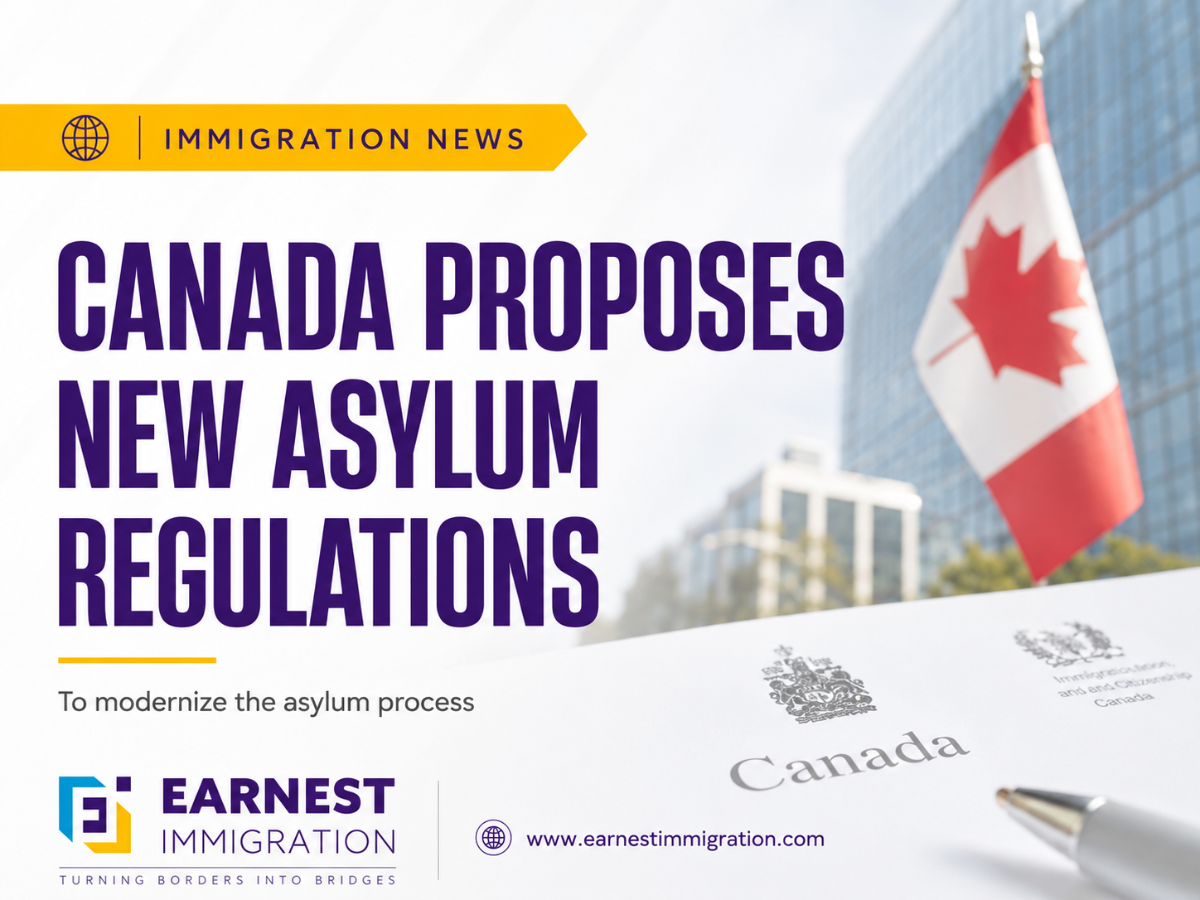
On June 19, 2026, Immigration, Refugees and Citizenship Canada (IRCC) published a package of proposed regulations to modernize Canada’s asylum process. The accompanying amendments were published in the Canada Gazette, Part I on June 20, 2026, alongside proposed changes to the Immigration and Refugee Board’s Refugee Protection Division (RPD) Rules.
The stated goal is a clearer, faster and better-managed system that still protects people who genuinely need Canada’s protection. The proposals are open for a 30-day public consultation that closes on July 20, 2026, with implementation anticipated later in 2026 once the rules are finalized.
Table of Contents
ToggleImportant: “Proposed” Is Not Yet Law
Two separate things are happening, and it is critical not to confuse them:
- Already enacted: Bill C-12 (the Strengthening Canada’s Immigration System and Borders Act) received royal assent on March 26, 2026. Several eligibility rules under it are already in force.
- Proposed (not yet in force): The June 2026 regulatory package and the RPD Rule amendments. These are in consultation and could change before they take effect.
Nothing in the June 2026 package changes your obligations today. If you already have an active claim, your current rules continue to apply unless and until the new regulations are finalized.
At a Glance
| Item | Status / Detail |
| Published | June 19, 2026 (IRCC); Canada Gazette, Part I, June 20, 2026 |
| Stage | Proposed — open for public consultation |
| Consultation closes | July 20, 2026 (30-day window) |
| Implementation | Anticipated later in 2026, subject to finalization |
| Legal basis | Implements Bill C-12 (royal assent March 26, 2026) |
| Who is affected | New and pending asylum claimants; eligible claimants seeking work permits |
What Is Already in Effect (Bill C-12 Eligibility Rules)
Under Bill C-12, two eligibility requirements already apply to asylum claims made on or after June 3, 2025:
- One-year rule: A claim made more than one year after a person’s first entry into Canada (for entries after June 24, 2020) will not be referred to the Immigration and Refugee Board (IRB) -even if the person left and returned.
- 14-day land-border rule: A claim from someone who enters Canada between official ports of entry along the Canada–US land border, and who claims more than 14 days after entering, will not be referred to the IRB.
These bars are live now. If either may apply to your situation, getting a professional assessment before you file is the single most important step — see our overview of inadmissibility and refugee claims.
The Six Proposed Changes
The proposed regulations cover six areas — the most significant procedural overhaul of Canada’s asylum system in over a decade. All of the following are proposals, not current rules:
| Proposed change | What it would mean |
| Single online application | Replaces the current multi-form paper system with one online application to make a claim. |
| 60-day filing deadline | Claimants would get 60 days to submit a complete application, with a one-time 30-day extension on request. |
| Faster work permits | Eligible claimants could receive a work permit sooner after submitting a complete claim. |
| Support for vulnerable claimants | Clearer rules for appointing designated representatives for minors and those who cannot fully understand proceedings. |
| Safe Third Country Agreement clarity | For online claims, the 14-day STCA Additional Protocol period would start when the person submits their information online. |
| Exceptions to ineligibility rules | Carve-outs for unaccompanied minors and certain claimants subject to the one-year eligibility requirement. |
Faster Work Permits for Eligible Claimants
One of the most practically significant proposals would let eligible asylum claimants enter the labour market sooner — so they can support themselves while awaiting a decision. The exact eligibility criteria and timelines would be confirmed in the finalized regulations.
If you are weighing work authorization options now — whether as a claimant, an employer-specific permit holder, or an employer hiring foreign workers — our work permit and LMIA services page explains the open and employer-specific pathways available under current rules.
The Tribunal Side: Proposed RPD Rule Changes
The IRB published its own proposed amendments to the Refugee Protection Division Rules. The headline change: claimants would have to file the personal documents they intend to rely on at a hearing no later than 30 days after the claim is referred to the RPD — a major shift from the current rule, which allows evidence as late as 10 days before a hearing.
The IRB says front-loading evidence enables better case triage, fewer postponements, and faster identification of cases suitable for expedited processing. Transitional provisions indicate that claims referred before the new rules take effect would continue under the current deadlines.
Why Now: The Backlog and Falling Volumes
The reforms respond to a system under heavy strain, even as new claim volumes drop sharply:
| Metric | Figure |
| IRB inventory, end of 2022 | ~70,000 pending claims |
| IRB inventory, end of 2025 | ~300,000 pending claims |
| Reported average wait time | ~25 months |
| Claims Jan–Apr 2026 vs. 2025 | 42% fewer |
| Claims Jan–Apr 2026 vs. 2024 | 63% fewer |
What Should Claimants Do Now?
- Do not wait passively. The eligibility bars under Bill C-12 are already live; timing can decide whether a claim is even referred to the IRB.
- Get a professional eligibility assessment before filing, especially if the one-year or 14-day rules might apply to you.
- Keep documents organized. If the 60-day filing deadline and the 30-day RPD disclosure rule are finalized, early document preparation becomes essential.
- Explore parallel pathways. Depending on your profile, programs such as Express Entry or the Provincial Nominee Program may offer more certainty than an asylum claim. A licensed consultant can map the trade-offs.
How Earnest Immigration Can Help
Earnest Immigration and Citizenship Services is a CICC-regulated, RCIC-licensed consultancy with offices in Windsor, Ontario and Regina, Saskatchewan, and 130+ five-star ratings. Only RCIC-licensed consultants and immigration lawyers are legally authorized to represent you before IRCC.
Our team reviews your eligibility, prepares complete and accurate applications, and explains your realistic options before you commit to a path. Whether your question is about an asylum claim, inadmissibility and refugee claims, a work permit, or finding a licensed immigration consultant near you, we can guide your next step.
Speak with a licensed professional before you act. You can also review our immigration legal services in Windsor for complex or cross-border cases.
Frequently Asked Questions
Are Canada’s new asylum regulations in effect yet?
No. The regulations published on June 19, 2026 are proposed and open for consultation until July 20, 2026. Implementation is anticipated later in 2026 after finalization. The Bill C-12 eligibility rules, however, are already in effect.
What is the proposed 60-day rule for asylum claims?
Under the proposal, a claimant would have 60 days to submit a complete application, with a one-time 30-day extension available on request. This is not yet law.
Will asylum claimants get work permits faster?
The proposal aims to let eligible claimants receive a work permit sooner after submitting a complete claim. Exact eligibility and timelines would be confirmed in the finalized regulations.
What are the Bill C-12 eligibility rules already in force?
For claims made on or after June 3, 2025: a one-year bar (claims filed more than a year after first entry to Canada after June 24, 2020 are not referred to the IRB) and a 14-day land-border bar for claims made more than 14 days after entering between ports of entry along the Canada–US land border.
Should I consult a licensed professional?
Yes. Immigration rules are changing and the eligibility bars are already live. A CICC-regulated, RCIC-licensed consultant can assess your situation before you file and recommend the strongest pathway.
Disclaimer: This article is for general information only and does not constitute legal advice. Asylum and immigration rules are subject to change. Consult a CICC-regulated, RCIC-licensed immigration consultant or a licensed immigration lawyer for advice on your specific situation.
Sources: IRCC news release and backgrounder (June 19, 2026); Canada Gazette, Part I (June 20, 2026), including the proposed Immigration and Refugee Protection Regulations amendments and proposed RPD Rules amendments; IRCC measures under Bill C-12 (royal assent March 26, 2026).