Immigration, Refugees and Citizenship Canada (IRCC) held Express Entry Draw 411 on April 15, 2026, issuing 4,000 Invitations to Apply (ITAs) to candidates under the French-Language Proficiency category (2026 – Version 2). The minimum CRS cut-off was 419 points, with a tie-breaking date of November 14, 2025, at 07:14:25 UTC.
Draw 411 is the fourth French-language draw of 2026 and the twenty-third Express Entry draw of the year. It brings the 2026 year-to-date total to 65,154 ITAs across 23 draws. The headline figure is the 26-point CRS jump from Draw 405 (March 18, CRS 393) to Draw 411 (April 15, CRS 419). This is the largest CRS increase between consecutive French draws since the category was introduced in 2023. It ends a six-month downward slide that had, for the first time in Express Entry history, taken the French draw threshold below 400 in Draw 405.
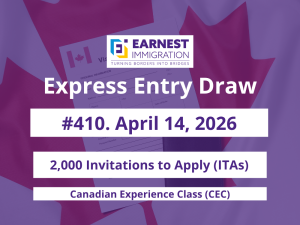
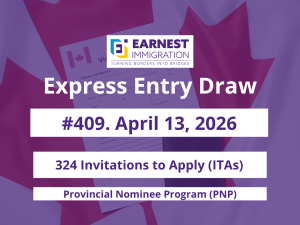
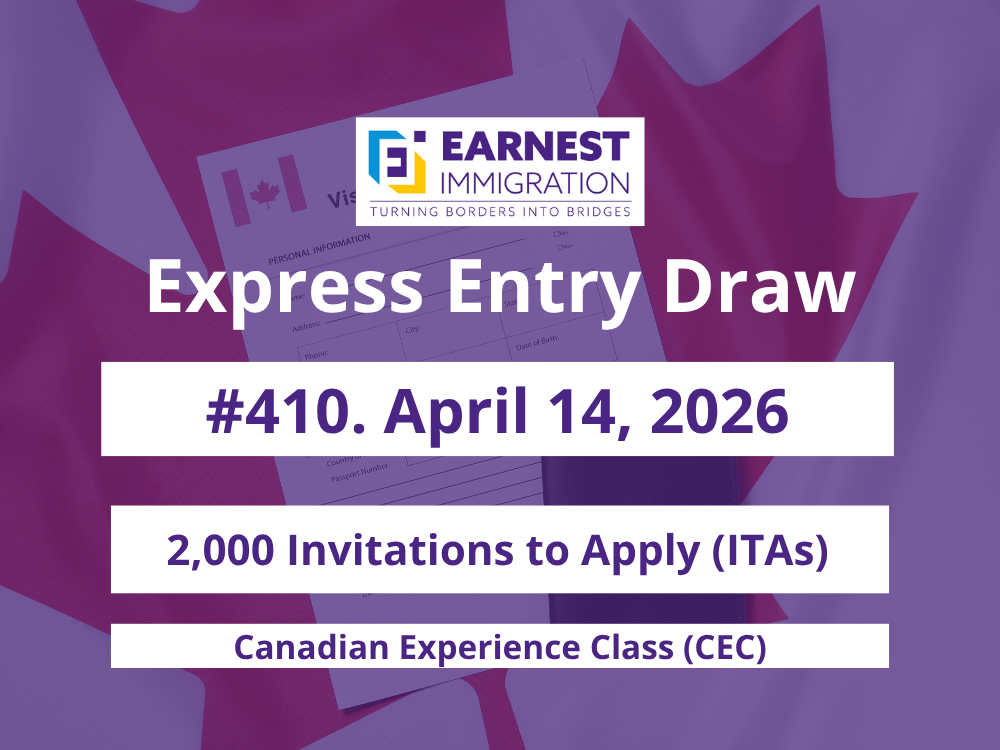
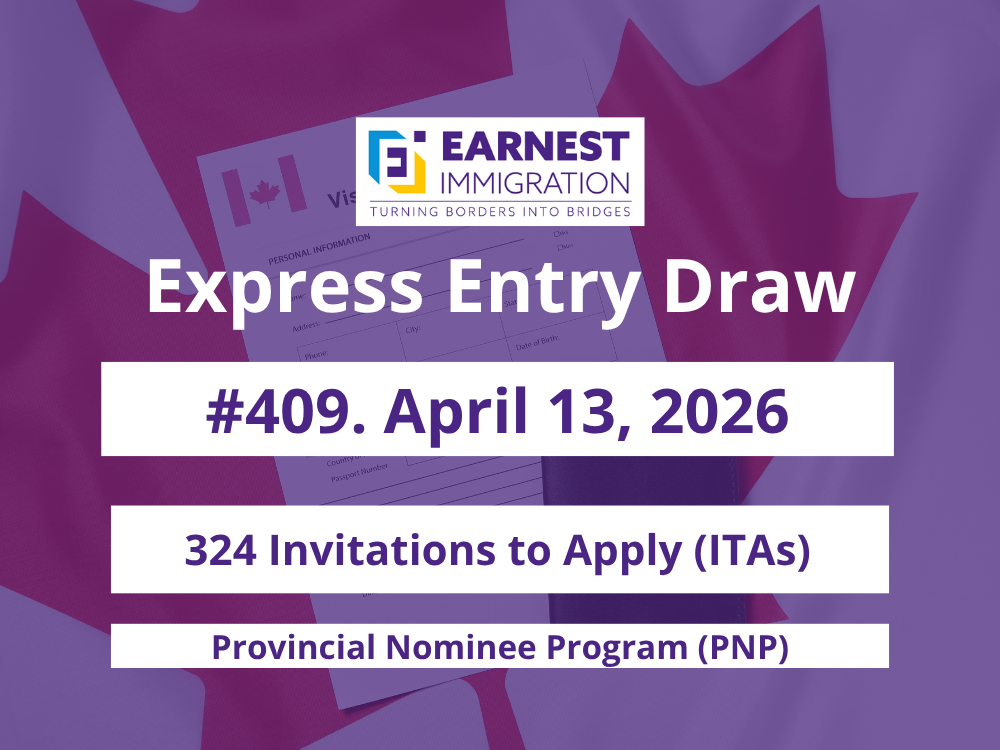
The draw arrives the day after Draw 410 (a CEC round on April 14), making this a third consecutive-day draw cluster over April 13-14-15, with IRCC issuing ITAs across PNP, CEC, and French categories on three straight days. The three draws combined to issue 6,324 ITAs in 72 hours — a cadence that underlines how intensively IRCC is managing its multi-category draw strategy heading into Q2.
Table of Contents
ToggleKey Details of Express Entry Draw 411
| Draw Number | 411 |
| Date | April 15, 2026 |
| Category | French-Language Proficiency (2026 – Version 2) |
| Invitations Issued | 4,000 |
| CRS Cut-off Score | 419 |
| Tie-breaking Rule | November 14, 2025, at 07:14:25 UTC |
The 26-Point CRS Jump: Why the French Threshold Rebounded
Draw 411’s CRS of 419 represents a 26-point increase from Draw 405’s record low of 393. This rebound is significant and requires explanation. The French-language draw CRS threshold is determined by the same fundamental dynamic as all Express Entry draws: the number of ITAs issued relative to the number of eligible candidates at and above each score level. Two factors combined to drive the CRS upward in Draw 411:
| Draw | CRS | ITAs | Context |
| Draw 394 (Feb 6) | 400 | 8,500 | 32 days since previous |
| Draw 401 (Mar 4) | 397 | 5,500 | 26 days since Draw 394 |
| Draw 405 (Mar 18) | 393 | 4,000 | 14 days since Draw 401 — record low |
| Draw 411 (Apr 15) | 419 | 4,000 | 28 days since Draw 405 — 26-pt rebound |
Factor 1 – A 28-day gap between French draws. Draw 405 was held on March 18; Draw 411 on April 15 — 28 days later. This is the second-longest gap between French draws in 2026 (after the 32 days between Draw 394 on February 6 and Draw 401 on March 4). During those 28 days, French-eligible candidates continued entering the pool. Many of these new entrants had stronger overall CRS profiles — including better language scores, Canadian education, or additional work experience — than the candidates who had been waiting since late 2025. This wave of higher-scoring new entrants raised the effective competitive threshold.
Factor 2 – Draw 405 cleared the lower-score French pool. Draw 405’s record-low CRS of 393 reached very deep into the French-eligible pool, inviting candidates who had been waiting since as far back as December 2025 (the tie-break date was December 29, 2025). By clearing virtually all French-eligible candidates at 393-419, Draw 405 left the pool with only those at 419+ and above. When Draw 411 issued 4,000 ITAs 28 days later, it had to reach the threshold that corresponded to the 4,000th-ranked French-eligible candidate in a refreshed pool — which turned out to be 419.
The 26-point rebound is therefore not a sign that the French pathway has become permanently harder. It is a natural pool refresh effect: after a record-low draw clears most of the pool below 420, the next draw — with new entries at higher score levels — settles at a higher threshold. Future French draws will depend on how many French-eligible candidates enter the pool in the interim and what their CRS distribution looks like.
The End of a Six-Month Sub-400 Slide
Draw 411’s CRS of 419 ends a period in which three of the four 2026 French draws had cleared at or below 400. The sub-400 threshold of Draw 405 (CRS 393) was historically unprecedented — the first time in Express Entry history that a French draw cleared below 400. The sequence from February through April 2026 traces a complete arc: 400 (February 6), 397 (March 4), 393 (March 18, record low), 419 (April 15, rebound). The rebound to 419 does not erase the significance of the sub-400 draws — they demonstrated that the French pool was deep enough and the government willing enough to run draws at those accessibility levels. But it does confirm that 393 was not a new floor; it was a cyclical low driven by specific pool dynamics at that moment in time.
All 2026 French Draws: A Complete Picture
| Draw # | Date | CRS | ITAs | Tie-breaking Date | Days Since Last French Draw |
| 411 | Apr 15 | 419 | 4,000 | Nov 14, 2025 | 28 days |
| 405 | Mar 18 | 393 | 4,000 | Dec 29, 2025 | 14 days |
| 401 | Mar 4 | 397 | 5,500 | Oct 10, 2025 | 26 days |
| 394 | Feb 6 | 400 | 8,500 | Feb 3, 2026 | 32 days |
The 2026 French draw series shows clear patterns. ITA volumes peaked at 8,500 in February’s pre-election-cycle draw and have declined toward the 4,000 level. The CRS moved from 400 down to a record 393 and has now bounced back to 419. The gap between draws has varied from 14 to 32 days, and this gap length is directly correlated with the CRS level — shorter gaps produce lower cut-offs (pool not fully refreshed), longer gaps produce higher cut-offs (new, higher-scoring entrants have accumulated). The 28-day gap before Draw 411 is consistent with its higher-than-recent CRS.
Complete Summary of All Express Entry Draws in 2026
| Draw # | Date | Category | CRS | ITAs |
| 411 | Apr 15 | French-Language Proficiency (Version 2) | 419 | 4,000 |
| 410 | Apr 14 | Canadian Experience Class | 515 | 2,000 |
| 409 | Apr 13 | Provincial Nominee Program | 786 | 324 |
| 408 | Apr 2 | Trades Occupations (Version 3) | 477 | 3,000 |
| 407 | Mar 31 | Canadian Experience Class | 509 | 2,250 |
| 406 | Mar 30 | Provincial Nominee Program | 802 | 356 |
| 405 | Mar 18 | French-Language Proficiency (Version 2) | 393 | 4,000 |
| 404 | Mar 17 | Canadian Experience Class | 507 | 4,000 |
| 403 | Mar 16 | Provincial Nominee Program | 742 | 362 |
| 402 | Mar 5 | Senior Managers with Canadian Work Experience | 429 | 250 |
| 401 | Mar 4 | French-Language Proficiency (Version 2) | 397 | 5,500 |
| 400 | Mar 3 | Canadian Experience Class | 508 | 4,000 |
| 399 | Mar 2 | Provincial Nominee Program | 710 | 264 |
| 398 | Feb 20 | Healthcare & Social Services (Version 3) | 467 | 4,000 |
| 397 | Feb 19 | Physicians with Canadian Work Experience | 169 | 391 |
| 396 | Feb 17 | Canadian Experience Class | 508 | 6,000 |
| 395 | Feb 16 | Provincial Nominee Program | 789 | 279 |
| 394 | Feb 6 | French-Language Proficiency (Version 2) | 400 | 8,500 |
| 393 | Feb 3 | Provincial Nominee Program | 749 | 423 |
| 392 | Jan 21 | Canadian Experience Class | 509 | 6,000 |
| 391 | Jan 20 | Provincial Nominee Program | 746 | 681 |
| 390 | Jan 7 | Canadian Experience Class | 511 | 8,000 |
| 389 | Jan 5 | Provincial Nominee Program | 711 | 574 |
2026 Express Entry ITAs by Category (as of April 15, 2026)
| Category | Draws | ITAs | % of Total |
| Canadian Experience Class | 7 | 32,250 | 49.5% |
| French-Language Proficiency | 4 | 22,000 | 33.8% |
| Healthcare and Social Services | 1 | 4,000 | 6.1% |
| Trades Occupations | 1 | 3,000 | 4.6% |
| Provincial Nominee Program | 8 | 3,263 | 5.0% |
| Physicians with Canadian Work Exp. | 1 | 391 | 0.6% |
| Senior Managers with Canadian Work Exp. | 1 | 250 | 0.4% |
| Total | 23 | 65,154 | 100% |
With 22,000 ITAs across four draws, the French-Language Proficiency category now accounts for 33.8% of all 2026 Express Entry invitations — making it the second-largest category by volume behind CEC (49.5%). The French category’s share has been growing steadily as the total year-to-date count increases. When draws are counted across the first 23 rounds of 2026, French draws are in fact the most impactful category for individual candidates with qualifying language scores: CRS 419 is 96 points below the current CEC threshold (515), and even at 419, the French pathway opens to candidates who have no chance of a near-term CEC ITA.
Express Entry Pool Composition (April 13, 2026)
| CRS Score Range | Number of Candidates |
| 601-1200 | ~350 |
| 501-600 | 13,610 |
| 451-500 | 73,563 |
| 401-450 | ~64,000 |
| 351-400 | ~52,500 |
| 301-350 | ~18,800 |
| 0-300 | ~8,100 |
| Total | 233,231 |
At CRS 419, Draw 411 reached candidates from the middle of the 401-450 band — which, combined with the 351-400 band, contains approximately 116,500 candidates. This is the densest region of the pool for most CEC-ineligible French-speaking candidates. The 4,000 ITAs in Draw 411 affected primarily the top of the 411-420 CRS range within the French-eligible sub-pool. The 451-500 band (73,563 candidates) contains the highest concentration of candidates above 419, meaning a large number of French-eligible candidates in this range were also served by this draw.
Key Statistics: 2026 Express Entry (as of April 15, 2026)
• Total ITAs issued in 2026: 65,154 across 23 draws (Draws 389-411)
• 4th French draw of 2026; French category: 22,000 total ITAs, 33.8% of year-to-date total
• 26-point CRS jump from Draw 405 (393) to Draw 411 (419) — largest increase between consecutive French draws in 2026
• CRS 419 ends the historic sub-400 French draw sequence; Draw 405’s 393 remains the all-time record low for French draws
• Draw 411 arrives 28 days after Draw 405 — longer gap produces higher CRS
• Three-draw cluster: April 13 (PNP, 324 ITAs), April 14 (CEC, 2,000 ITAs), April 15 (French, 4,000 ITAs) — 6,324 ITAs in 3 days
• French ITA volume trend in 2026: 8,500 (Feb 6) — 5,500 (Mar 4) — 4,000 (Mar 18) — 4,000 (Apr 15)
Understanding the French-Language Proficiency Category
Why France Is Canada’s Strategic Priority in Immigration
Canada’s commitment to Francophone immigration outside Quebec is embedded in government policy at the highest level. The federal Official Languages Act and successive Immigration Levels Plans have set targets for French-speaking permanent residents settling outside Quebec, with the 2023-2028 plan calling for a minimum of 9.5% of admissions to be Francophone outside Quebec. In 2025, this target was missed — only approximately 4-5% of admissions outside Quebec were Francophone. The French-language Express Entry draws are one of the primary mechanisms for accelerating progress toward this target.
The policy rationale extends beyond demographic targets. Francophone communities outside Quebec — in New Brunswick, Ontario, Manitoba, Alberta, and British Columbia in particular — face labour shortages in sectors where bilingual workers are essential: healthcare, education, social services, government, and professional services. Immigration is the fastest mechanism available to grow these communities at the pace the targets require.
The consequence for candidates is clear: the French-language proficiency category exists because of a structural, multi-decade policy commitment — not a temporary program. As long as Canada’s Francophone immigration gap persists, French draws will continue, and the pathway will remain accessible at CRS thresholds that are categorically different from what general or CEC draws require.
French-Language Draw Eligibility: What You Need
To receive an ITA in a French-language proficiency draw, candidates must meet two distinct sets of requirements:
Requirement 1 – Express Entry Program Eligibility: Hold an active Express Entry profile under FSWP, CEC, or FSTP. This is the same program eligibility required for any Express Entry draw.
Requirement 2 – French-Language Category Eligibility:
• French-language test results showing a minimum of NCLC 7 in all four abilities (speaking, listening, reading, and writing)
• Valid French test results — TEF Canada or TCF Canada — within their two-year validity window at the time the ITA is received
• French test results must have been submitted to IRCC through the online Express Entry profile
There is no minimum English language requirement to qualify for the French-language proficiency category. A candidate who meets NCLC 7 in French but has CLB 4 in English qualifies for the French category — though their overall CRS will be affected by the English score. No Canadian work experience is required for the French category (unlike CEC, Physicians, Senior Managers, and Researchers draws). No specific occupation is required — the category is purely language-based.
The Bilingualism Bonus: One of the Fastest CRS Improvements Available
One of the most powerful and underused strategies in Express Entry is French language development by primarily English-speaking candidates. Adding French proficiency at NCLC 7 or higher in all four abilities unlocks not only the French-language draw category but also adds a bilingualism bonus to the CRS score that persists for all draw types, including CEC draws:
| Language Combination | Bilingualism Bonus | Notes |
| English only (CLB 9 all four) | 0 bilingualism bonus | Only base CRS factors |
| French NCLC 7 in all four + English CLB 4 | 25 additional CRS points | Minimum bilingualism bonus |
| French NCLC 7 + English CLB 5-8 | 32 additional CRS points | Moderate bilingualism bonus |
| French NCLC 7 + English CLB 9+ | 50 additional CRS points | Maximum bilingualism bonus |
A candidate with CLB 9 in English and no French who adds French to NCLC 7 gains 50 additional CRS points — simultaneously crossing into French draw eligibility (current threshold: 419) and adding 50 points to their general CRS for CEC draws. For a candidate currently at CRS 465 on the CEC pathway, adding the maximum 50-point bilingualism bonus would bring them to 515 — exactly at Draw 410’s CEC threshold. This dual benefit makes French language development uniquely high-return compared to any other single profile improvement available within Express Entry.
Approved French Language Tests: TEF Canada and TCF Canada
IRCC accepts only two French language tests for Express Entry: TEF Canada (Test d’evaluation de francais pour le Canada) and TCF Canada (Test de connaissance du francais pour le Canada). These are distinct from the general TEF and TCF tests offered by the same exam bodies — only the Canada-specific versions are accepted. Key facts:
• TEF Canada: Offered by the Chambre de Commerce et d’Industrie de Paris. Tests all four language abilities (expression orale, comprehension de l’oral, expression ecrite, comprehension de l’ecrit). Valid for two years from the test date. Available at test centres in Canada and internationally
• TCF Canada: Offered by France Education International. Available through Alliance Francaise centres and designated test sites. Similar four-ability structure. Also valid for two years
• Minimum threshold: NCLC 7 in all four abilities to qualify for the French-language proficiency category. NCLC 9 in all four abilities maximises the bilingualism bonus for candidates with high English scores
• Score conversion: Both TEF Canada and TCF Canada scores convert to NCLC levels; the IRCC website provides official conversion tables
For candidates who have only taken IELTS or CELPIP for English, adding a TEF Canada or TCF Canada result is the sole path to French category eligibility. The tests require specific preparation — French language proficiency cannot be demonstrated through English test scores. Preparation time for reaching NCLC 7 varies considerably depending on existing French ability, ranging from a few weeks for near-fluent speakers to 6-12 months for beginners.
The Three-Draw April 13-15 Cluster: What It Means
Draw 411 is the third consecutive-day draw following Draw 409 (PNP, April 13) and Draw 410 (CEC, April 14). This back-to-back-to-back pattern — PNP, CEC, French across three days — is the first time in 2026 that three distinct draw types have been issued on three consecutive calendar days. Several implications flow from this:
• Collective impact: The three draws together removed approximately 6,324 candidates from the pool — 324 PNP nominees (from 601-1200 CRS band), 2,000 CEC candidates (from 501-600 band), and 4,000 French-language candidates (primarily from 411-450 CRS band)
• IRCC pace: Three draws in three days on the heels of the April 2 Trades draw suggests IRCC is maintaining an aggressive early-Q2 pace, running approximately 3-4 draws per two-week cycle
• Category coverage: The April 13-15 cluster covered three of the four most active draw types (PNP, CEC, French) in three days, effectively running a complete mini-cycle of the most populated pathways
• Pool composition effect: Post-April 15, the pool at 419-515 CRS has been thinned by all three draws simultaneously, creating a temporary reduction in competitive density across multiple score bands
After Receiving a French ITA in Draw 411: Key Actions
Candidates who received an ITA in Draw 411 have 60 days from April 15, 2026 (approximately until June 14, 2026) to submit a complete permanent residence application. French-specific documentation requirements:
• Valid French language test results: TEF Canada or TCF Canada showing NCLC 7 or higher in all four abilities. Results must remain within their two-year validity window at the time of application submission (not just at the time of ITA). If your test results will expire before June 14, an expedited retest may be required
• Language test report number: The test report number must be accurately entered in your Express Entry profile and must match the test results you submit. Discrepancies are a common cause of refusals in language-based draws
• English test results if applicable: If you claimed English language points in your profile (IELTS or CELPIP), those results must also remain valid and must match the scores entered in your profile
• Work experience reference letters: On company letterhead, confirming job title, NOC code, duties, hours per week, salary, and employment dates for all qualifying experience
• Educational Credential Assessment (ECA) if claiming foreign education points under FSWP
• Police clearance certificates from Canada and all countries of residence for 6 months or more since age 18
• Medical examination from an IRCC-designated physician
• Proof of settlement funds if applying under FSWP without a Canadian job offer
• Valid passport
One important note specific to French draw applicants: IRCC verifies French language test validity as part of routine application processing. Test results that expire during the processing period (IRCC targets 6 months) could create issues. If your test results were taken close to the 2-year mark, verify their expiry date explicitly before submitting your application.
Frequently Asked Questions
The CRS jumped from 393 to 419. Does this mean the French pathway is becoming harder to access?
Not structurally harder — the 26-point increase reflects a specific combination of pool dynamics (Draw 405 cleared deeply, and 28 days of higher-scoring entrants accumulated before Draw 411) rather than a policy change. The French pathway threshold fluctuates with pool composition. Earlier in 2026, draws cleared at 393-400; before that, in 2025, draws ranged from the high 300s to the low 420s. The 419 in Draw 411 is within the normal historical operating range for French draws. More importantly, 419 is still roughly 96 points below the current CEC threshold (515) — which means the French pathway continues to open doors for candidates who have no realistic near-term CEC prospects. The strategic question for candidates is not whether 419 is higher than 393 — it clearly is — but whether developing French proficiency to NCLC 7 is worth the investment given the consistent 60-100+ point CRS differential between French and CEC thresholds. The answer for most candidates in the 380-480 CRS range is yes.
I have NCLC 7 in listening and speaking but only NCLC 6 in reading and writing. Do I qualify?
No. The French-language proficiency category requires NCLC 7 in all four abilities: speaking, listening, reading, and writing. A single ability below NCLC 7 disqualifies you from the French category regardless of your scores in the other three abilities. This is a hard requirement, not an average. The most common failure pattern for French category candidates is reading or writing falling one NCLC level short. If you are close to NCLC 7 in all four abilities, a targeted retest focusing on the weaker abilities — with specific preparation for the TEF Canada or TCF Canada format — is typically the most actionable next step. Many candidates underestimate the reading and writing components of French tests, which differ significantly in structure from listening and speaking sections. Dedicated preparation for the reading and writing sections specifically is advisable before retesting.
I speak French natively (grew up in a Francophone family) but have never taken TEF Canada or TCF Canada. Can I use my native French to qualify?
Native or heritage French speakers absolutely can and should qualify for the French category — but the qualification requires taking TEF Canada or TCF Canada regardless of native proficiency. IRCC has no mechanism to accept self-reported language ability; all language scores must come from designated tests. For native French speakers, the test is often straightforward — many score NCLC 9-10 without extensive preparation. The practical steps are: register for TEF Canada or TCF Canada at a designated test centre (Alliance Francaise centres, Chambre de Commerce offices in major cities, and designated facilities internationally), take all four components of the test, and submit the results to IRCC through your Express Entry profile. Do not wait for the test to apply for Express Entry — get into the pool now with whatever other credentials you have while arranging the test. The bilingualism bonus and French category eligibility can be added to an existing profile once you have test results.
My French test results expire in 3 months. I am in the pool at CRS 415. Should I retest now?
Yes — retest urgently. If your French test results expire before you receive an ITA and submit your PR application, you lose both your French category eligibility and your bilingualism CRS bonus, which could affect your standing in other draw types as well. With results expiring in 3 months and Draw 411’s CRS at 419, you are 4 points below the current threshold. Retesting could simultaneously extend your validity window by 2 years and potentially improve your CRS if your scores improve. Even if your retest scores are identical to your current scores, renewing the validity extends the window within which you can receive an ITA and still submit. Arrange a retest appointment as soon as possible — test centre availability can be limited, and test results typically take 1-3 weeks to be delivered and processed by IRCC. Do not wait until your results have expired; it is much better to retest before expiry than to try to recover after.
I have CRS 390 with strong French scores. What is my realistic timeline to receive an ITA?
At CRS 390, you are 29 points below Draw 411’s cut-off of 419. Whether you receive an ITA in the near term depends on upcoming French draw volumes and pool composition at draw time. If IRCC runs a large French draw (5,000+ ITAs) at a CRS around 410-415, you would be in range. If draws remain at 4,000 ITAs, the threshold will likely stay in the 415-425 range based on current pool dynamics. To improve your position: the most direct action is improving your overall CRS score. The French bilingualism bonus is already included in your 390 — so additional CRS improvements must come from other factors: a language score improvement in any language band adds points; Canadian work experience (if you are abroad, your 12-month mark approaching is worth noting); an additional educational credential if you have more than a bachelor’s degree. Every additional 5-10 CRS points significantly improves your probability of inclusion in a near-term French draw. Continue entering draws while pursuing profile improvements in parallel.
Is it possible to qualify for both a French draw and a CEC draw simultaneously with the same profile?
Yes, absolutely — and this is one of the most powerful configurations in Express Entry. If you have 12 months of Canadian skilled work experience (making you eligible for CEC) and NCLC 7 French in all four abilities (making you eligible for the French category), your single Express Entry profile is considered in both draw types simultaneously. You do not need separate profiles or applications. If a French draw occurs first and reaches your CRS, you receive a French ITA. If a CEC draw reaches your CRS first, you receive a CEC ITA. Whichever draw reaches you first, you accept that ITA and begin your PR application. The practical implication: candidates with both Canadian work experience and French proficiency are in the strongest possible position in 2026’s multi-category system. They have two independent draw types that could serve them, and because French draws typically clear 60-100 points below CEC draws, they are much more likely to receive an early French ITA than to wait for a CEC draw to reach them at the same score level.
The Bottom Line
Express Entry Draw 411 issued 4,000 ITAs to French-language proficiency candidates at a CRS of 419 on April 15, 2026 — the fourth French draw and twenty-third Express Entry draw of the year. The 26-point CRS jump from Draw 405’s record low of 393 reflects a natural pool refresh: 28 days of higher-scoring new entrants accumulated while the low-score French pool was depleted by Draw 405’s deep clear. At 419, the French pathway remains accessible to candidates 96 points below the current CEC threshold, confirming that French proficiency continues to be the single highest-impact individual advantage in the 2026 Express Entry system.
Draw 411 also closes a remarkable three-day April cluster in which IRCC issued 6,324 ITAs across PNP, CEC, and French draws on April 13, 14, and 15 — a pace that reflects the department’s Q2 strategy of running frequent, smaller, targeted draws rather than infrequent large general rounds. With 65,154 ITAs issued in just over three months, 2026 is on track for one of the highest Express Entry volumes in the system’s history, with French draws playing a structurally significant role in that volume.
At Earnest Immigration, our licensed consultants help French-speaking candidates verify their test eligibility, calculate the full value of the bilingualism bonus for their profile, identify whether the French category or a parallel CEC or PNP pathway is fastest, and prepare complete permanent residence applications within the 60-day ITA window. Whether you received an ITA in Draw 411, are preparing your first TEF Canada or TCF Canada test, or are strategising about whether to develop French as a pathway, the Earnest Immigration team is here to guide you. Contact us today for a comprehensive profile assessment.