Immigration, Refugees and Citizenship Canada (IRCC) held Express Entry Draw 410 on April 14, 2026, issuing 2,000 Invitations to Apply (ITAs) to candidates under the Canadian Experience Class (CEC). The minimum CRS cut-off was 515 points, with a tie-breaking date of June 10, 2025, at 02:46:26 UTC.
Draw 410 holds a dual distinction: it is simultaneously the smallest CEC draw of 2026 (2,000 ITAs) and the highest CRS cut-off CEC draw of 2026 (515 points). These two records are directly linked — the smaller the draw, the higher the cut-off. With 2,000 invitations, IRCC reached only the top-ranked CEC candidates in the pool, those at or above CRS 515. The 515 cut-off is the highest CEC threshold since Draw 387 (December 16, 2025), when 5,000 ITAs were issued at CRS 515.
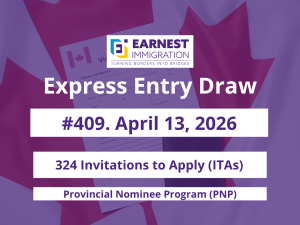
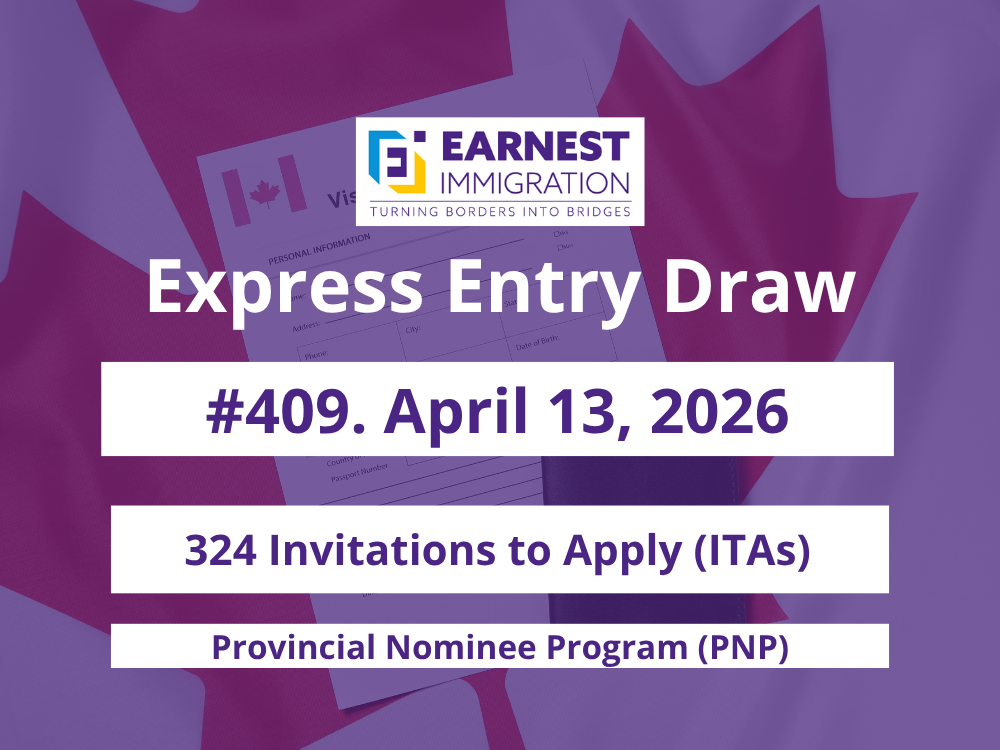
The draw arrives the day after Draw 409 (a PNP round on April 13), making this the second consecutive-day draw of the April 13-14 period. Together, the two draws issued 2,324 ITAs across PNP and CEC in 24 hours. Draw 410 is the 22nd Express Entry draw of 2026, the 7th CEC draw, and brings the year-to-date total to 61,154 ITAs.
Table of Contents
ToggleKey Details of Express Entry Draw 410
| Draw Number | 410 |
| Date | April 14, 2026 |
| Program | Canadian Experience Class (CEC) |
| Invitations Issued | 2,000 |
| CRS Cut-off Score | 515 |
| Tie-breaking Rule | June 10, 2025, at 02:46:26 UTC |
The Dual Record: Smallest and Highest-CRS CEC Draw of 2026
Draw 410 is a milestone in the 2026 CEC draw series — but not a celebratory one for candidates sitting at 509-514. The two records it sets are both consequences of the same underlying dynamic:
• 2,000 ITAs — smallest CEC draw of 2026 (previous low: 2,250 in Draw 407)
• CRS 515 — highest CEC cut-off of 2026 (previous high: 511 in Draw 390, January 7)
When IRCC issues fewer invitations, fewer candidates are reached, and the CRS threshold rises because only the highest-ranked candidates are selected. This is the most predictable relationship in all of Express Entry: smaller draw size directly produces higher CRS, and vice versa. Draw 410 is the logical endpoint of the shrinking CEC draw trend that began after the large January and February rounds.
| Draw | Date | ITAs | CRS | Pattern |
| 390 | Jan 7 | 8,000 | 511 | Large — reaches deep into pool |
| 392 | Jan 21 | 6,000 | 509 | Large — lower CRS |
| 396 | Feb 17 | 6,000 | 508 | Large — lower CRS |
| 400 | Mar 3 | 4,000 | 508 | Medium — stable CRS |
| 404 | Mar 17 | 4,000 | 507 | Medium — new 2026 low |
| 407 | Mar 31 | 2,250 | 509 | Small — CRS rises |
| 410 | Apr 14 | 2,000 | 515 | Smallest — highest 2026 CRS |
The table makes the pattern unmistakable. January’s 8,000-ITA draw cleared at 511. Draws of 4,000-6,000 consolidated at 507-509. The two smaller draws in late March and April 2026 — 2,250 and 2,000 ITAs — have produced cut-offs of 509 and 515 respectively. The relationship is direct and consistent: IRCC is now issuing modestly-sized CEC draws that reach only the highest-scoring candidates in the pool, and the cut-off has risen accordingly.
The 6-Point CRS Jump: From 509 to 515
The 6-point increase from Draw 407 (CRS 509, March 31) to Draw 410 (CRS 515, April 14) is the largest CRS jump between consecutive CEC draws since the high-volume draws of early 2026 first drove the threshold down. Two factors explain this jump:
• Fewer ITAs: Draw 410 issued 250 fewer invitations than Draw 407 (2,000 vs 2,250). This reduction by itself would produce some CRS increase
• Pool replenishment at higher scores: The pool grew by approximately 3,300 new profiles between late March and mid-April, many of whom entered with CRS scores in the 510-520 range. These newer, higher-scoring profiles pushed the threshold upward as they competed with existing profiles
The combined effect: the pool at CRS 509-514 was partially cleared by Draw 407, and new entries since then have been predominantly at 515+, shifting the competitive threshold upward. This is the pool refresh dynamic in action — as older profiles at a given CRS are cleared, newer profiles entering at slightly higher scores define the next draw’s competitive environment.
The Tie-breaking Date: June 10, 2025 — A Return to Deep History
One of the most analytically significant details of Draw 410 is the tie-breaking date of June 10, 2025 — over 10 months before the draw. This stands in sharp contrast to Draw 407, which had a tie-breaking date of just 13 days prior:
| Draw | Date | CRS | Tie-break Date | Approx. Profile Age |
| 407 | Mar 31, 2026 | 509 | Mar 18, 2026 | 13 days prior |
| 410 | Apr 14, 2026 | 515 | Jun 10, 2025 | 10+ months prior |
Draw 407’s March 18 tie-break date meant the pool at CRS 509 was being rapidly replenished by new profiles. The June 10, 2025 date for Draw 410 means the opposite: candidates at exactly CRS 515 who submitted their profiles as early as June 2025 are still in the pool waiting. This is a deep backlog at the 515 threshold. The pool at 515 contains candidates who have been waiting for 10+ months for a CEC draw to reach them — a waiting period that reflects how consistently the CEC threshold has been below 515 throughout late 2025 and Q1 2026.
For candidates whose profiles are dated after June 10, 2025, at CRS 515: you were not invited in Draw 410 even with the right score. You are in the next tier of the queue — positioned for invitation in a future draw that uses a tie-breaking date after June 10, 2025.
Complete Summary of All Express Entry Draws in 2026
| Draw # | Date | Category | CRS | ITAs |
| 410 | Apr 14 | Canadian Experience Class | 515 | 2,000 |
| 409 | Apr 13 | Provincial Nominee Program | 786 | 324 |
| 408 | Apr 2 | Trades Occupations (Version 3) | 477 | 3,000 |
| 407 | Mar 31 | Canadian Experience Class | 509 | 2,250 |
| 406 | Mar 30 | Provincial Nominee Program | 802 | 356 |
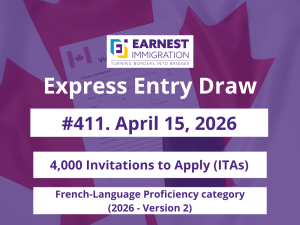
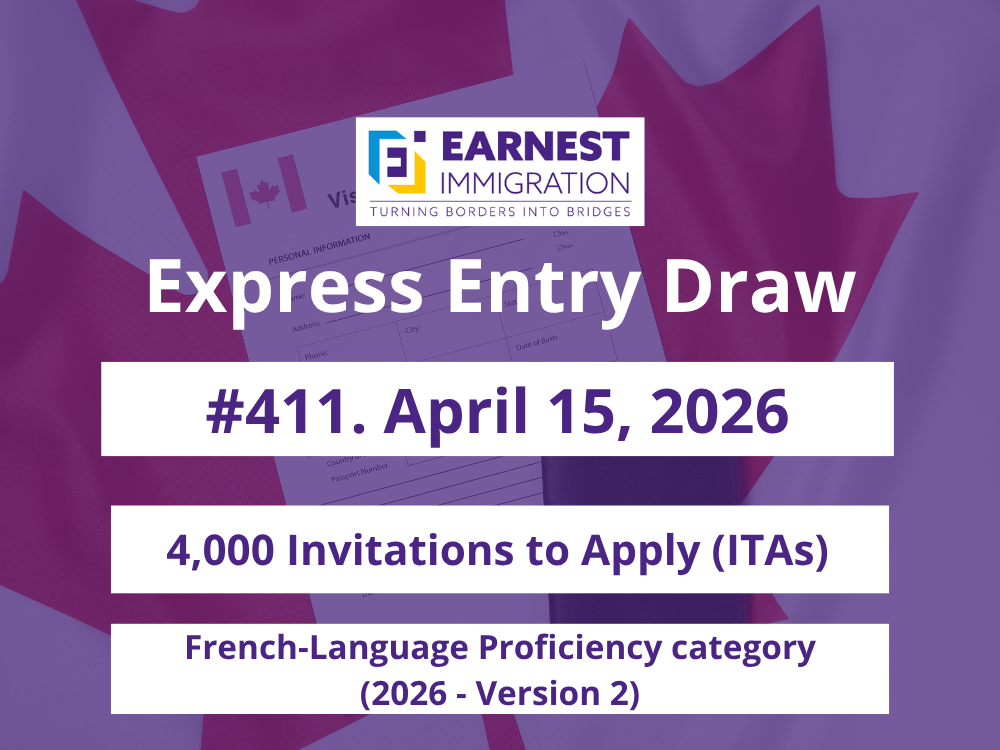
| 405 | Mar 18 | French-Language Proficiency (Version 2) | 393 | 4,000 |
| 404 | Mar 17 | Canadian Experience Class | 507 | 4,000 |
| 403 | Mar 16 | Provincial Nominee Program | 742 | 362 |
| 402 | Mar 5 | Senior Managers with Canadian Work Experience | 429 | 250 |
| 401 | Mar 4 | French-Language Proficiency (Version 2) | 397 | 5,500 |
| 400 | Mar 3 | Canadian Experience Class | 508 | 4,000 |
| 399 | Mar 2 | Provincial Nominee Program | 710 | 264 |
| 398 | Feb 20 | Healthcare & Social Services (Version 3) | 467 | 4,000 |
| 397 | Feb 19 | Physicians with Canadian Work Experience | 169 | 391 |
| 396 | Feb 17 | Canadian Experience Class | 508 | 6,000 |
| 395 | Feb 16 | Provincial Nominee Program | 789 | 279 |
| 394 | Feb 6 | French-Language Proficiency (Version 2) | 400 | 8,500 |
| 393 | Feb 3 | Provincial Nominee Program | 749 | 423 |
| 392 | Jan 21 | Canadian Experience Class | 509 | 6,000 |
| 391 | Jan 20 | Provincial Nominee Program | 746 | 681 |
| 390 | Jan 7 | Canadian Experience Class | 511 | 8,000 |
| 389 | Jan 5 | Provincial Nominee Program | 711 | 574 |
2026 Express Entry ITAs by Category (as of April 14, 2026)
| Category | Draws | ITAs | % of Total |
| Canadian Experience Class | 7 | 32,250 | 52.8% |
| French-Language Proficiency | 3 | 18,000 | 29.5% |
| Healthcare and Social Services | 1 | 4,000 | 6.6% |
| Trades Occupations | 1 | 3,000 | 4.9% |
| Provincial Nominee Program | 8 | 3,263 | 5.3% |
| Physicians with Canadian Work Exp. | 1 | 391 | 0.6% |
| Senior Managers with Canadian Work Exp. | 1 | 250 | 0.4% |
| Total | 22 | 61,154 | 100% |
CEC draws have now issued 32,250 ITAs across 7 draws in 2026 — 52.8% of the total 61,154 year-to-date. Despite the recent reduction in individual draw sizes, CEC remains the dominant draw type by volume in 2026. The key shift in early Q2 is that average draw volumes have fallen: Q1’s seven CEC draws averaged approximately 4,321 ITAs each; Draw 410 at 2,000 ITAs is well below that average. If this lower-volume pattern continues into Q2, the CEC’s share of total year-to-date ITAs will gradually decline as other categories (French, Trades, Healthcare) continue at their own volumes.
Express Entry Pool Composition (April 13, 2026)
| CRS Score Range | Number of Candidates |
| 601-1200 | ~350 |
| 501-600 | 13,610 |
| 451-500 | 73,563 |
| 401-450 | ~64,000 |
| 351-400 | ~52,500 |
| 301-350 | ~18,800 |
| 0-300 | ~8,100 |
| Total | 233,231 |
The pool grew to 233,231 candidates as of April 13, up from approximately 230,186 on March 29 — an increase of roughly 3,045 profiles in two weeks. This growth despite the 2,324 ITAs issued across the April 13-14 draws indicates that new profile submissions are outpacing draw removals, at least in the short term. The 501-600 band holding 13,610 candidates is the range most directly affected by CEC draws. With Draw 410 at CRS 515, candidates in the 501-514 range were not reached and remain in this band. The 451-500 band at 73,563 — the largest cohort — continues to be inaccessible to CEC draws at current threshold levels.
Key Statistics: 2026 Express Entry (as of April 14, 2026)
• Total ITAs issued in 2026: 61,154 across 22 draws (Draws 389-410)
• Draw 410: smallest CEC draw of 2026 at 2,000 ITAs; highest CEC CRS of 2026 at 515
• CRS 515 is the highest CEC threshold since Draw 387 (December 16, 2025, CRS 515)
• 6-point CRS jump from Draw 407 (509) — largest inter-draw increase in 2026 CEC series
• Tie-breaking date June 10, 2025 — over 10 months prior, indicating deep backlog at 515
• Pool at 233,231 (April 13) — up ~3,045 from late March, showing continued new profile entries
• 7th CEC draw of 2026; CEC accounts for 52.8% of all 2026 ITAs (32,250 of 61,154)
• 22nd Express Entry draw of 2026 — one draw every 4.3 days on average since January 5
What Draw 410 Means: A Changed CEC Landscape for Q2
IRCC Appears to Be Throttling CEC Volumes in Early Q2
The pattern of the last three CEC draws — 4,000 (March 17), 2,250 (March 31), 2,000 (April 14) — shows a clear downward trajectory in invitation volumes. This is not accidental. Several factors likely explain why IRCC is issuing smaller CEC draws in Q2 compared to Q1:
• Annual target management: Canada’s 2026 plan calls for 380,000 permanent residents. With 61,154 Express Entry ITAs already issued by mid-April — approximately 16% of the annual cap in just over three months — IRCC needs to moderate the pace to avoid concentrating too many invitations in early quarters while leaving too few for Q3 and Q4
• Processing capacity balancing: Each ITA generates a permanent residence application that must be processed by IRCC officers. The 59,000+ Q1 ITAs are now converting into active applications. Smaller Q2 draws reduce the incremental load on processing capacity while existing applications work their way through the system
• Category draw expansion: IRCC has been expanding the variety of category-based draws (Trades, Healthcare, French, Physicians, Senior Managers). Each of these draws serves populations that might otherwise be eligible for CEC draws. By holding targeted category draws, IRCC can serve these sub-groups at their appropriate CRS thresholds while keeping general CEC volumes lower
• Pool composition signaling: The June 2025 tie-breaking date suggests the pool at CRS 515 is deep and has been waiting a long time. IRCC appears willing to let this backlog continue rather than issuing large draws that would require lower CRS thresholds to fill
What CRS 515 Requires: A Profile Snapshot
For candidates targeting the CEC pathway, a CRS of 515 represents a more demanding threshold than the 507-509 seen in Q1. The profile combinations that typically produce scores in the 513-517 range include:
• Younger candidates (25-29) with a bachelor’s degree, CLB 9 English, and 1-2 years of Canadian work experience — score range approximately 490-510 base, with additions from Canadian education, sibling bonus, or strong secondary language scores pushing to 515
• Mid-30s candidates with a master’s degree or doctorate, CLB 9-10 across most bands, and 3+ years of Canadian experience — multiple factors combining to reach 515+
• Candidates with English CLB 9-10 AND French NCLC 5+ claiming the bilingualism bonus — the 25-50 point French bonus is one of the fastest ways to push a profile from the 465-490 range to above 515
• Candidates who have recently completed Canadian post-secondary education — the 15-30 point Canadian education bonus can tip borderline profiles above the 515 threshold
The important implication: for many candidates at 507-514, the fastest path to CRS 515 is not waiting — it is a targeted language test retake. Moving from CLB 8 to CLB 9 in a single ability can add 5-10 points. Improving across multiple abilities can add 20-30 points. A single language test session, with focused preparation, could eliminate the gap between a current score and the 515 threshold.
The Strategic Calculus for Candidates at 500-514 in Q2 2026
Draw 410’s CRS 515 threshold leaves a large number of candidates — those in the 500-514 range — in a particularly uncertain position. The question for each of them is: is waiting for the next CEC draw the right strategy?
The honest assessment is that it depends on how far below 515 you currently sit. Candidates at 513-514 are one CRS point from a draw that might reach them in the next round, especially if draw volumes increase slightly. Candidates at 507-512 face a more substantial gap in a low-volume draw environment. Candidates at or below 505 are unlikely to be served by near-term CEC draws at current volumes, and should be actively pursuing parallel pathways:
• Language score improvement: The highest-ROI action for most candidates. A language test retake is typically the fastest and least expensive way to add 10-30 CRS points. Even candidates who feel their scores are already strong may find untapped potential in specific CLB levels
• French proficiency development: For candidates without any French, developing NCLC 7 opens the French-language draw at CRS thresholds of 393-419 — more than 100 points below the current CEC threshold. The bilingualism bonus adds 25-50 CRS points simultaneously. This is a multi-month investment but potentially the highest single-action return available in the system
• Trades, Healthcare, or other occupation category eligibility: If your occupation qualifies under the Trades (CRS 477), Healthcare (CRS 467), or other active categories, these pathways may have accessible thresholds regardless of your overall CRS. Verifying your NOC code eligibility for every active category is an essential step
• Provincial nomination: For candidates in the 451-500 range especially, a provincial nomination remains the most reliable pathway. The 600-point bonus guarantees an ITA in the next PNP draw regardless of base CRS
After Receiving a CEC ITA in Draw 410
Candidates who received an ITA in Draw 410 have 60 days from April 14, 2026 (approximately until June 13, 2026) to submit a complete permanent residence application. Essential actions:
• Request employer reference letters immediately: This is consistently the longest lead-time document. Letters must be on company letterhead, signed by supervisor or HR, confirming job title, NOC code, hours worked per week, salary, employment dates, and a description of main duties aligned with the NOC description. Allow 2-3 weeks minimum
• Check language test validity: IELTS, CELPIP, TEF Canada, and TCF Canada results must be within their 2-year validity window at time of application submission. Results expiring before June 13 may require an expedited retest
• Initiate police clearance certificates: Required from Canada and all countries of residence for 6+ months since age 18. International certificates can take 4-12 weeks
• Book medical examination: From an IRCC-designated physician; valid for 12 months
• Verify profile accuracy: Every field must match your supporting documents exactly. NOC codes, employment dates, and education details that differ between the profile and documents are a leading cause of procedural fairness letters
IRCC targets a six-month processing timeline for complete CEC applications. Applications that are thoroughly prepared in the first two to three weeks of the 60-day window consistently have better outcomes than those assembled under time pressure.
Frequently Asked Questions
The CRS jumped 6 points from 509 to 515. Is the CEC threshold going to keep rising?
The relationship between draw size and CRS is the key variable. If IRCC continues issuing small CEC draws (2,000-2,250 ITAs), the CRS will likely remain in the 511-519 range. If IRCC returns to larger draws of 3,500-4,000+ ITAs, the CRS would be expected to drop back toward 507-509 or lower. The 6-point jump in Draw 410 is not a sign of permanent structural tightening — it is a direct consequence of the smaller draw size. The forward-looking question is whether IRCC plans to keep CEC draws small throughout Q2, or whether it will issue larger rounds to compensate for the moderation. Monitoring draw sizes alongside CRS thresholds is the correct approach for candidates tracking their prospects.
My CRS is 515 but my profile was submitted after June 10, 2025. Was I invited in Draw 410?
No — if your profile was submitted after June 10, 2025, you were not invited in Draw 410 regardless of your CRS score of 515. The tie-breaking rule means that when multiple candidates share the minimum CRS score, priority goes to those who entered the pool earliest. Because the tie-breaking date was June 10, 2025, only candidates at exactly 515 CRS who submitted their profiles before that date received ITAs. Candidates with CRS 515 who submitted after June 10 are now the next in the queue at that score level — you will be reached in future draws as the tie-breaking date advances past your submission date. Maintain your profile in active status and do not delete and resubmit, as doing so would reset your submission date to today and push you further back in the queue.
My CRS is 510. Based on current draw trends, when might a CEC draw reach me?
This is impossible to predict with certainty, but the current environment provides useful context. The CRS at 510 is 5 points below Draw 410’s cut-off. To reach CRS 510, IRCC would need to either issue a larger draw (approximately 3,000+ ITAs at the current pool composition) or wait for the pool at 515+ to thin sufficiently. In Q1 2026, draws of 4,000 ITAs consistently cleared at 507-508. If IRCC returns to 4,000-ITA CEC draws, a CRS of 510 may be reached. However, if the current 2,000-2,250 ITA pattern continues, the threshold is likely to remain above 510 for the near term. The most actionable advice is: pursue a parallel pathway simultaneously. A language test improvement of 5-10 points, French development for the bilingualism bonus, or a provincial nomination all offer more reliable timelines than waiting for a specific CEC threshold.
If I improve my CRS from 510 to 515 through a language retest, does my tie-breaking date change?
No. Updating your CRS score through a language test improvement does not change your profile submission date or your tie-breaking position. Your tie-breaking date remains the date your Express Entry profile was originally submitted. When you update your profile with new language scores, IRCC recalculates your CRS immediately, but your tie-breaking priority is preserved. This is an important advantage of updating rather than deleting and resubmitting your profile. If you improve your language scores and reach CRS 515, your tie-breaking position is your original profile submission date — which gives you priority over anyone who entered the pool at CRS 515 after you did. The combination of a higher CRS through a language retest and an earlier submission date is the optimal position for upcoming draws.
Is there any chance of a general all-program draw being held in 2026? What would that mean for candidates at 500-514?
No general all-program draw has been held since April 23, 2024. IRCC has not announced any plans to hold one in 2026. If a general draw were held, its CRS cut-off would likely be in the 490-530 range based on current pool composition — potentially within reach of candidates in the 500-514 range, though the specific threshold would depend on the number of ITAs issued. For candidates at 500-514, a general draw at 505 would be highly beneficial; at 520, it would not help. The strategic implication is the same as always: maintaining an active, complete profile in the pool costs nothing and ensures you benefit from any draw that reaches your score level, whether program-specific, category-based, or general. Do not rely on a specific draw type as your only strategy.
My PGWP expires in 3 months and my CRS is 512. What are my most urgent options?
With a PGWP expiring in 3 months and a CRS of 512, you are in a time-sensitive situation that requires parallel action on multiple fronts. First and most urgently: assess whether you qualify for a Bridging Open Work Permit (BOWP). A BOWP requires that your permanent residence application has been submitted before your current PGWP expires. This means you need to receive an ITA and submit your PR application before the 3-month mark. With Draw 410 at CRS 515, you are 3 points short of the recent threshold. Second: immediately retake language tests. Adding 3-5 CRS points through a language test improvement is achievable in 4-6 weeks with focused preparation. Third: explore PGWP extension or maintained status options with your employer and a licensed consultant. Fourth: pursue a provincial nomination in parallel. Some provinces (Saskatchewan’s SINP in particular) have been processing nominations in 2-3 weeks, which is within the timeframe you have. Acting on all of these simultaneously is the correct approach — do not wait on one pathway before starting another.
The Bottom Line
Express Entry Draw 410 issued 2,000 ITAs to CEC candidates at a CRS of 515 on April 14, 2026 — simultaneously the smallest and highest-scoring CEC round of 2026. Both records are consequences of the same dynamic: IRCC has moderated its CEC draw volumes heading into Q2, and with fewer invitations, only the highest-ranked candidates are reached. The tie-breaking date of June 10, 2025 — over 10 months prior to the draw — reveals a deep backlog at the 515 CRS level, confirming that a significant number of qualified CEC candidates have been waiting more than a year to receive an ITA.
For the large cohort of candidates currently sitting in the 500-514 CRS range, Draw 410 is a call to action rather than a reason to wait. In a small-draw environment where the CEC threshold may remain at 511-520+ for the foreseeable future, the fastest paths to an ITA are: language score improvement, French proficiency development, provincial nomination, or occupation category eligibility under Trades, Healthcare, or other active categories. Waiting passively for the CEC threshold to drop to 510 is a strategy that may work eventually — but it involves a timeline that is entirely out of the candidate’s control.
At Earnest Immigration, our licensed consultants help CEC candidates calculate their exact CRS and gap to the current threshold, identify the fastest available score improvements, assess eligibility for parallel pathways including category draws and PNP streams, and prepare complete permanent residence applications within the 60-day ITA window. Whether you received an ITA in Draw 410 or are strategising for Q2 2026, the Earnest Immigration team is here to guide you. Contact us today for a comprehensive profile assessment.