On October 27, 2026, Immigration, Refugees and Citizenship Canada (IRCC) held Express Entry Draw #452, issuing 5,000 Invitations to Apply (ITAs) to candidates in the French-language proficiency category at a minimum Comprehensive Ranking System (CRS) score of 407. It was the second 5,000-invitation French draw in eleven days, and it marks a turning point: with it, French-language draws have now issued 60,500 ITAs in 2026, passing the Canadian Experience Class (57,750) to become the largest Express Entry category of the year.
The round also settles a question we raised eleven days ago. When the October 16 draw posted a record 435 cut-off, we argued it was a backlog artifact – the product of a two-month gap between French draws – and not a sign the French advantage was eroding. This draw confirms it: the cut-off fell 28 points to 407. The Earnest Immigration team covers the verified numbers and what the milestone means below.
Table of Contents
ToggleExpress Entry Draw #452 at a Glance
| Detail | Information |
| Draw number | #452 |
| Date | October 27, 2026 |
| Category | French-language proficiency (category-based) |
| Invitations issued | 5,000 |
| CRS cut-off score | 407 (down 28 from the Oct 16 draw’s 435) |
| Tie-breaking rule | July 13, 2026 at 19:22:00 UTC |
| Draw position in 2026 | 64th Express Entry round; 12th French-language round |
| French ITAs in 2026 to date | 60,500 – now the largest category of the year |
| CEC ITAs in 2026 to date | 57,750 (French now leads by 2,750) |
| All-category ITAs in 2026 to date | 149,259 across 64 rounds |
| Application deadline | 60 days from the date of the invitation |
The Milestone: French Is Now the Top Category of 2026
For most of the year the Canadian Experience Class was the volume leader, with French second and closing. After this draw, French is in front. Its 60,500 ITAs represent more than 40% of all Express Entry invitations issued in 2026 – a remarkable share for a category that selects on a single, learnable credential. Eleven days ago French trailed CEC by 2,250; two 5,000-invitation draws have turned that into a 2,750-ITA lead.
This is not a statistical fluke. It reflects a deliberate federal priority: Canada maintains Francophone immigration targets outside Quebec, and French-language Express Entry draws are the primary lever for meeting them. The category has run large and often all year, and IRCC issued 10,000 French ITAs in the eleven days before the November 3 draw pause – a clear signal of how hard the department is pushing this stream.
A note on what the number is and is not: 60,500 is invitations issued, not permanent residents admitted. Canada’s Francophone PR admission target outside Quebec is 30,267 for 2026, rising to 31,825 for 2027 – a separate, smaller measure that counts people who actually land, across all Francophone streams. The two should not be conflated. But the direction is unmistakable: French-speaking candidates are being invited at a scale no other category matches.
The 435 Scare Is Already Over
On Draw #450 we made a specific call. The French cut-off had jumped to a 2026 high of 435, and the obvious reading – that French was getting harder – was, we argued, wrong. The spike came from a two-month gap that let candidates accumulate in the pool; once a fresh draw cleared that backlog, the cut-off would fall again. Here is what happened next:
| French draw | Date | ITAs | CRS cut-off | Reading |
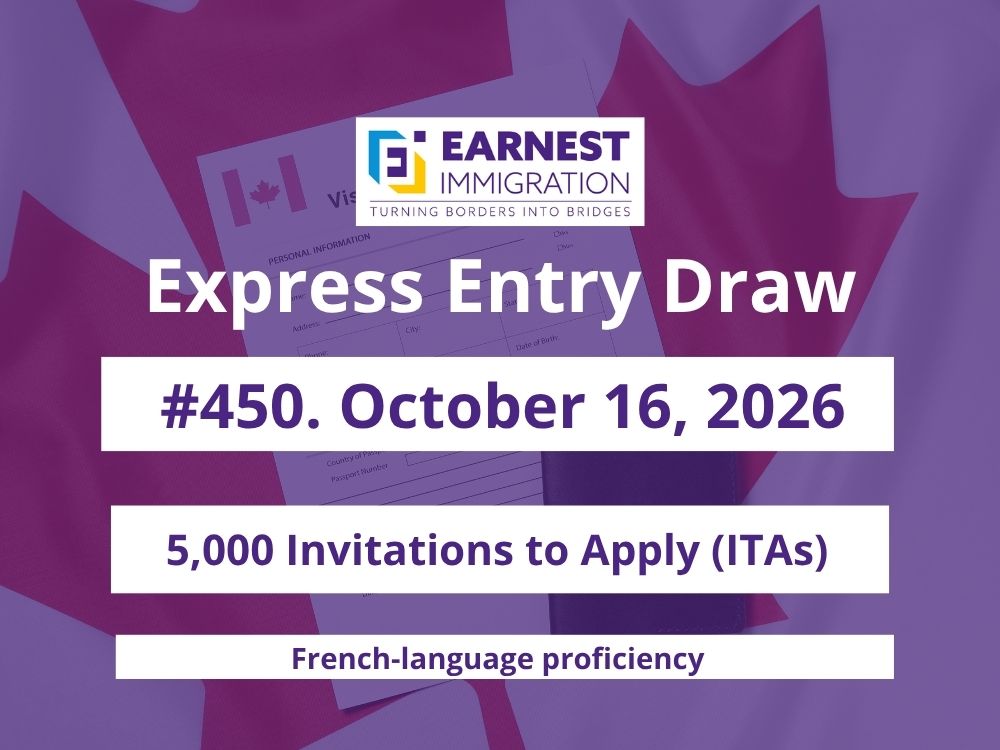
| #450 | October 16, 2026 | 5,000 | 435 | Cleared the two-month backlog |
| #452 | October 27, 2026 | 5,000 | 407 | Reached a shallower queue – down 28 |
The mechanism played out exactly as described. The October 16 draw absorbed the accumulated candidates; eleven days later, the October 27 draw reached a shallower, lower-scoring part of the pool, and the floor dropped to 407. The tie-break reinforces it: at July 13, it reaches back about three and a half months, indicating this draw picked up older profiles left behind once the recent surge was cleared. The lesson for candidates is the one this series keeps returning to – read a single French cut-off against the pattern, not in isolation. 435 was never the new normal.
French Cut-Offs in 2026
| French draw | CRS cut-off | Note |
| July 9, 2026 | 420 | Prior 2026 high (before October) |
| August 19, 2026 | 382 | 2026 low |
| October 16, 2026 (#450) | 435 | 2026 high – backlog spike |
| October 27, 2026 (#452) | 407 | Back down as the backlog cleared |
Across the year the French cut-off has moved between 382 and 435 – a band that sits dramatically below the general pool. For reference, the Canadian Experience Class drew at 519 on October 15. Even at its 2026 peak, the French route undercut that by 84 points; at 407, the discount is 112. French-language ability remains the single largest advantage available in Express Entry.
What the November 3 Reform Means Here
From November 3, IRCC’s high-wage occupation reform recalculates every CRS score in the pool and pauses all rounds for about two weeks. Category-based draws, French included, still select by category and then rank by CRS, so when scores rise across the board, French cut-offs will likely drift up in the rounds that follow the pause. As we argued on #450, that strengthens rather than weakens the case for French: when the whole pool shifts upward, a category discount of 100-plus points becomes more valuable, not less – especially for candidates whose occupation is not high-wage and who therefore gain little from the reform directly. The timing of the two pre-pause French draws underlines the point: IRCC cleared as many French candidates as it could before the transition.
If You Received an ITA in Draw #452
You have 60 days from the date of your invitation to submit a complete permanent residence application. Your invitation is unaffected by the November 3 changes – act on it on the normal timeline. Work through the following in order; the police certificates and medical exam are the items most likely to break the deadline.
- Accept the invitation in your IRCC secure account and record your exact 60-day deadline.
- Confirm your French-language test result (TEF Canada or TCF Canada) is valid, correctly entered, and meets at least NCLC 7 across all four abilities – the basis of your category eligibility.
- Request police certificates from every country where you have lived six months or more since age 18. Start the same day; some jurisdictions take six to eight weeks.
- Book your medical exam with an IRCC-approved panel physician, or confirm a prior exam is still within its validity period.
- Assemble work experience evidence: reference letters on company letterhead stating job title, duties, hours per week, salary, and employment dates.
- Arrange certified translations for any document not in English or French.
- Budget the fees. As of April 30, 2026, an economic-class principal applicant pays $990 in processing fees plus a $600 Right of Permanent Residence Fee – $1,590 in total. Biometrics and accompanying family members are additional.
IRCC currently processes most Express Entry applications in about six months, so a candidate who submits promptly should plan for a decision in the first half of 2027.
If You Were Not Invited
At 407, this was one of the more accessible French draws of the year, so a near-miss is a strong signal to push on the factors you can still move. Confirm your French result is valid and correctly claimed, maximise every other CRS factor you legitimately can, and – if your occupation is high-wage – make sure your profile is positioned for the November 3 recalculation. If you have not yet reached NCLC 7, the scale of these draws is the clearest possible argument for getting there: French has just become the largest route into Express Entry, and it remains the single biggest advantage in the system.
How Earnest Immigration Can Help
The French route rewards candidates who document their language ability correctly and keep a clean, current profile. A mis-entered test result or a lapsed certificate can cost a candidate the very advantage they trained for.
As a CICC-regulated, RCIC-licensed firm, Earnest Immigration supports candidates at every stage:
- Confirming French-language category eligibility and that your TEF/TCF results are claimed correctly for maximum CRS
- Assessing how the November 3 recalculation affects your standing in future French draws
- Building your profile so your CRS reflects everything you can legitimately claim
- Weighing the French category against CEC and provincial nomination routes for your specific profile
- Preparing a complete, deadline-proof permanent residence application after an ITA
Frequently Asked Questions
What was the CRS cut-off for the French Express Entry draw on October 27, 2026?
The minimum CRS score for Draw #452 was 407, with 5,000 ITAs issued to French-language proficiency candidates. That is 28 points below the October 16 draw’s 435, as a second large draw reached a shallower part of the pool.
Which is the biggest Express Entry category in 2026?
As of Draw #452, the French-language proficiency category is the largest, with 60,500 ITAs in 2026 – more than 40% of all invitations – ahead of the Canadian Experience Class at 57,750. Across all categories, 2026 stands at 149,259 ITAs over 64 rounds.
Why did the French cut-off drop from 435 to 407 in eleven days?
The October 16 draw cleared a two-month backlog of French-speaking candidates, so the October 27 draw reached a shallower, lower-scoring queue and the cut-off fell. It confirms that the record 435 was a one-off backlog spike, not a lasting increase.
Is the French route still a strong advantage?
Yes – the strongest in the system. At 407 it sits 112 points below the Canadian Experience Class draw of October 15 (519). French-language ability remains the single largest advantage available to Express Entry candidates who can reach NCLC 7.
Do the 60,500 French ITAs mean Canada has hit its Francophone target?
No. The 60,500 is invitations issued, not permanent residents admitted. Canada’s Francophone PR admission target outside Quebec is 30,267 for 2026 (31,825 for 2027) – a separate, smaller measure counting people who actually land, across all Francophone streams. The two should not be conflated.
What French level do I need to qualify?
The French-language proficiency category requires at least NCLC 7 in all four abilities (reading, writing, listening, speaking), shown through an approved test (TEF Canada or TCF Canada). You must also meet the eligibility criteria of an Express Entry program.
Will the November 3 reform affect French draws?
Indirectly. The reform recalculates all CRS scores on November 3 and pauses rounds for about two weeks, so category cut-offs – including French – will likely rise afterward. But because the whole pool shifts upward, the French category discount becomes more valuable, not less, especially for candidates whose occupation is not high-wage.
How long do I have to apply after receiving an ITA?
You have 60 days from the date of your invitation to submit a complete permanent residence application. Missing the deadline returns you to the pool.
What does a PR application cost in 2026?
As of April 30, 2026, an economic-class principal applicant pays $990 in processing fees plus a $600 Right of Permanent Residence Fee – $1,590 in total. Biometrics and accompanying family members cost extra.
Talk to a Licensed Consultant
Earnest Immigration and Citizenship Services Inc. is a CICC-regulated, RCIC-licensed Canadian immigration consultancy with offices in Windsor, Ontario and Regina, Saskatchewan, serving clients across North America and North India.
Book a consultation to have your French-language eligibility and Express Entry options assessed by a licensed consultant.
Disclaimer: This article is general information about Canadian immigration programs and is current as of November 3, 2026. It is not legal advice and does not create a consultant-client relationship. Express Entry cut-off scores, invitation volumes, processing times, government fees, and the November 3, 2026 program changes and draw pause are set by IRCC and may be revised. Verify all figures against official Government of Canada sources or consult a licensed RCIC about your specific circumstances.
Data sources: IRCC ministerial instructions and rounds-of-invitation records (canada.ca), corroborated via Moving2Canada, Canadim, immigCanada, VisaVerge, and Peerless Immigration; IRCC Express Entry category-based selection instructions; IRCC 2026–2028 Immigration Levels Plan (Francophone targets); Government of Canada fee schedule notice dated March 27, 2026.