Immigration, Refugees and Citizenship Canada (IRCC) held Express Entry Draw 403 on March 16, 2026, issuing 362 Invitations to Apply (ITAs) to candidates under the Provincial Nominee Program (PNP). The minimum CRS cut-off was 742 points, with a tie-breaking date of October 5, 2025, at 20:35:25 UTC.
Draw 403 is the sixth PNP-specific draw of 2026 and the first since Draw 399 on March 2 – a 14-day gap that follows the four-draw burst of March 2–5. With a CRS of 742, it sits 32 points above the previous PNP draw’s cut-off of 710, and represents the second-highest PNP cut-off of 2026, eclipsed only by the 789 recorded in Draw 395 on February 16. The 362 ITAs issued are notably more than the 264 in Draw 399, marking a modest but meaningful increase in PNP invitation volumes.
For candidates currently in the Express Entry pool with a provincial nomination, Draw 403 is yet another confirmation that the pathway to permanent residence remains active and regular. For candidates without a nomination, the 742 cut-off is a clear signal: building a provincial nomination is among the most reliable strategies available for securing an ITA in the current Express Entry environment.
Table of Contents
ToggleKey Details of Express Entry Draw 403
| Draw Number | 403 |
| Date | March 16, 2026 |
| Program | Provincial Nominee Program (PNP) |
| Invitations Issued | 362 |
| CRS Cut-off Score | 742 |
| Tie-breaking Rule | October 5, 2025, at 20:35:25 UTC |
Context: 11 Days After the Busiest Week of 2026
Draw 403 arrives eleven days after the most concentrated burst of Express Entry activity in 2026. Between March 2 and March 5, IRCC issued four consecutive daily draws:
• March 2 – Draw 399 (PNP): 264 ITAs at CRS 710
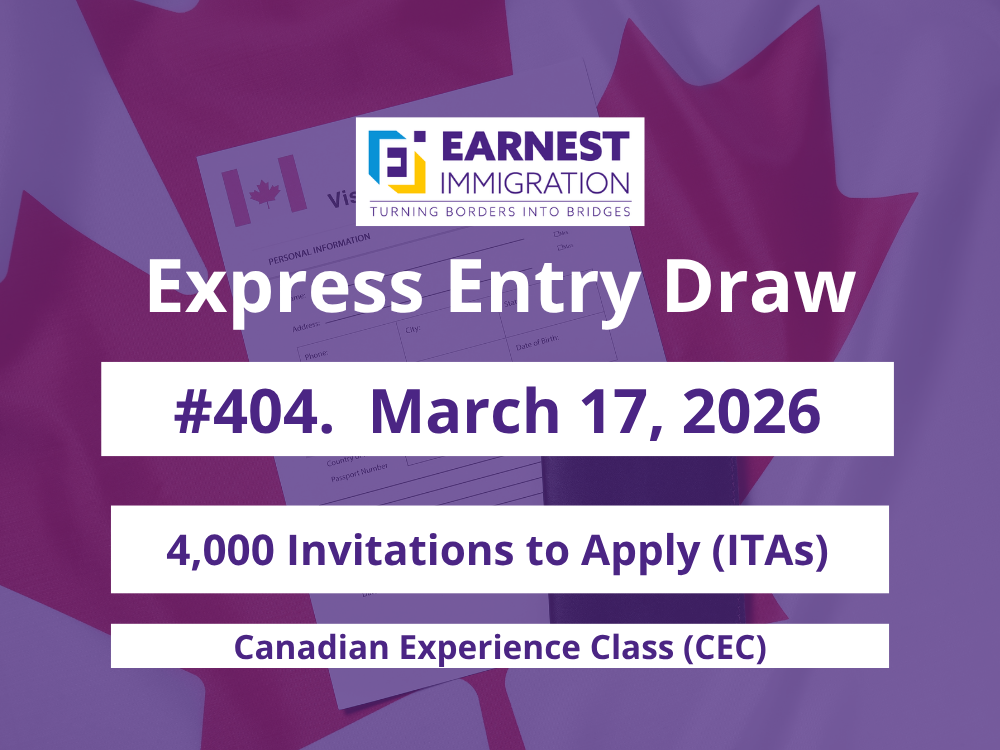
• March 3 – Draw 400 (CEC): 4,000 ITAs at CRS 508
• March 4 – Draw 401 (French-Language): 5,500 ITAs at CRS 397
• March 5 – Draw 402 (Senior Managers): 250 ITAs at CRS 429
Draw 403 resumes the PNP stream after that intensive week, reinforcing that IRCC does not treat PNP draws as rare events – they are a regular and recurring feature of the system. In 2026, PNP draws have been held approximately every two to three weeks, making provincial nomination not just a pathway to a high CRS score but also a reliable indicator of near-term invitation timing.
Why the CRS Is 742: Decoding the PNP Cut-off
A CRS of 742 can appear daunting to candidates who are unfamiliar with how the Provincial Nominee Program interacts with the Express Entry ranking system. In reality, the vast majority of candidates invited in Draw 403 had base CRS scores far below 742 – likely in the range of 100 to 160 – before their provincial nomination was added to their profiles. The 600-point nomination bonus is what elevates their total CRS above the 700 threshold.
| Factor | Points | Notes |
| Base CRS score (without nomination) | ~100–160 | Example: solid language + some experience |
| Provincial Nomination bonus | +600 | Added automatically upon nomination |
| Total CRS with nomination | ~700–760 | Competitive for PNP draws |
| Draw 403 cut-off | 742 | Tie-break: Oct 5, 2025 |
This means that a candidate with a base CRS of 142 who receives a provincial nomination sees their total CRS jump to 742 – exactly at Draw 403’s cut-off. A candidate with a base of 155 would land at 755, comfortably above the threshold. The relevant competitive metric for PNP candidates is therefore not their total CRS but their base CRS relative to other nominated candidates at the same score, and – when scores are equal – their Express Entry profile submission date, which determines tie-breaking priority.
The 32-point increase from Draw 399 (710) to Draw 403 (742) does not mean that IRCC raised the bar for nominees. It reflects that the pool of candidates at or above 710 was cleared in the previous round, and the next cluster of nominated candidates eligible for Draw 403 happened to have base scores that translated to a 742 total CRS threshold. PNP cut-offs fluctuate between draws based purely on the distribution of nominated candidates in the pool at the time of the draw.
All 2026 PNP Express Entry Draws at a Glance
| Draw | Date | CRS | ITAs |
| Draw 389 | Jan 5 | 711 | 574 |
| Draw 391 | Jan 20 | 746 | 681 |
| Draw 393 | Feb 3 | 749 | 423 |
| Draw 395 | Feb 16 | 789 | 279 |
| Draw 399 | Mar 2 | 710 | 264 |
| Draw 403 | Mar 16 | 742 | 362 |
The six 2026 PNP draws show a CRS range of 710 to 789 – a 79-point spread that reflects the variable composition of the nominated sub-pool at each draw date rather than a policy shift. The lowest cut-off (710) and highest cut-off (789) were both recorded in early February through early March. The total PNP ITAs issued in 2026 to date stands at 2,583 – a relatively small share of the 45,224 total ITAs issued this year, consistent with the PNP’s role as a targeted, provincial-capacity-driven stream rather than a high-volume federal pipeline.
Express Entry Pool Changes: March 1 to March 15, 2026
Between the March 1 pool snapshot and the March 15 update (the day before Draw 403), the pool composition shifted in several ways that provide insight into candidate activity and draw impact:
| CRS Range | March 1, 2026 | March 15, 2026 | Change |
| 601–1200 | 258 | 360 | +102 |
| 501–600 | 14,031 | 13,039 | −992 |
| 451–500 | 71,680 | 72,558 | +878 |
| 401–450 | 65,868 | 64,638 | −1,230 |
| 351–400 | 53,727 | 53,565 | −162 |
| 301–350 | 18,694 | 18,903 | +209 |
| 0–300 | 8,276 | 8,299 | +23 |
| Total | 232,534 | 231,362 | −1,172 |
The most notable movement is in the 601-1200 band, which grew by 102 candidates. This band almost exclusively contains provincial nominees – candidates whose total CRS has been elevated above 600 by the nomination bonus. This growth indicates that additional provincial nominations were issued and uploaded to Express Entry profiles between March 1 and March 15, replenishing the pool of candidates eligible for PNP draws. For IRCC, this growth signals that there are enough newly nominated candidates in the pool to support another PNP round – which is precisely what happened with Draw 403.
The 501-600 band shrank by 992 candidates, likely reflecting ITAs issued in Draw 400 (CEC, CRS 508) and expired profiles. The overall pool declined by 1,172 candidates, consistent with the large number of ITAs issued in the March 2-5 draws. These trends confirm a healthy, active pool that is continuously being replenished by new profiles and provincial nominations even as draws remove candidates.
Understanding the Provincial Nominee Program and Express Entry
How the PNP Works Within Express Entry
The Provincial Nominee Program (PNP) is Canada’s decentralised immigration mechanism that allows provinces and territories to nominate candidates for permanent residence based on their own labour market and demographic needs. When a candidate receives a provincial nomination and adds it to their Express Entry profile, IRCC automatically adds 600 points to their CRS score. This 600-point boost is the largest single CRS adjustment available in the entire system – larger than a job offer, larger than a sibling in Canada, and larger than the difference between a high school diploma and a PhD.
The 600-point bonus was deliberately designed to give provinces effective control over which federal Express Entry candidates they prioritise. Because the bonus virtually guarantees that a nominated candidate will receive an ITA in the next PNP-specific draw, nominations act as near-certain tickets to a permanent residence application – provided the candidate also meets the eligibility requirements of at least one Express Entry program (FSWP, CEC, or FSTP).
Importantly, receiving a provincial nomination does not automatically result in an ITA. The nominated candidate must still be in the Express Entry pool with an active profile, and must wait for IRCC to hold a PNP-specific draw. In 2026, PNP draws have been held approximately every two to three weeks, so the wait between nomination and ITA has typically been short. However, candidates should not delay entering or maintaining their Express Entry profile after receiving a nomination.
Types of PNP Streams That Feed Into Express Entry
Not all provincial nominations are connected to Express Entry. There are two types of PNP nominations:
• Enhanced nominations (Express Entry-linked): The province nominates a candidate directly from the Express Entry pool, or the nomination is uploaded to an existing Express Entry profile. These nominations add the 600-point CRS bonus and make the candidate eligible for PNP-specific Express Entry draws. Most major skilled worker PNP streams in Ontario, British Columbia, Alberta, Saskatchewan, and other provinces operate as Enhanced nominations
• Base nominations (non-Express Entry): The province issues a nomination outside the Express Entry system. These candidates do not receive the CRS bonus and instead apply directly to IRCC for permanent residence under a paper-based process. Base nominations typically involve candidates who are not eligible for any Express Entry program – for example, semi-skilled workers in TEER 4 or 5 occupations, or candidates who do not meet FSWP or CEC language minimums
Candidates who receive an Enhanced nomination can submit their permanent residence application through the faster Express Entry processing stream, with IRCC targeting a six-month processing timeline. Base nomination applicants are processed outside Express Entry and typically face longer timelines. For most skilled workers in NOC TEER 0 through 3 occupations, the Express Entry-linked Enhanced nomination is the applicable path.
Key Provincial Nomination Streams for Skilled Workers in 2026
Each province manages its own PNP streams and issues nominations based on its own priorities. The most active Enhanced nomination streams for skilled workers in 2026 include:
• Ontario Immigrant Nominee Program (OINP) – Human Capital Priority stream: Draws directly from the Express Entry pool for candidates with CRS scores typically in the 490–550+ range in specific occupations. OINP also has streams for Master’s graduates, PhD graduates, and employer job offer candidates
• British Columbia PNP – Skills Immigration and BC PNP Tech: Invites candidates in high-demand occupations, with the BC PNP Tech stream operating on a fast-track basis for technology, health, childcare, and engineering NOC codes. BC PNP uses a Registrations of Interest system and issues invitations to top-ranked candidates
• Alberta Immigrant Nominee Program (AINP) – Alberta Express Entry stream: Targets candidates with strong ties to Alberta, specific occupation demand, or prior Alberta work experience. Alberta has been especially active in nominating technology and healthcare workers
• Saskatchewan Immigrant Nominee Program (SINP) – Express Entry category: Assesses candidates based on a points grid and nominates workers in high-demand occupations who meet Saskatchewan’s economic priorities
• Manitoba Provincial Nominee Program (MPNP) – Skilled Workers in Manitoba stream: Prioritises candidates who already have a connection to Manitoba through an employer, family member, or prior study/work experience in the province
• Nova Scotia Nominee Program – Labour Market Priorities: Targets specific high-demand occupations as announced, with streams for healthcare workers, technology workers, and international graduates from Nova Scotia institutions
Provinces regularly open, close, and modify their streams based on nomination allocation caps set by the federal government. Monitoring provincial portals directly – not just third-party immigration news sites – is the most reliable way to track current stream availability and invitation cutoffs.
PNP Strategy for Candidates in the 451–500 CRS Range
The largest cohort in the current Express Entry pool – 72,558 candidates as of March 15, 2026 – falls in the 451–500 CRS band. These candidates are below the CEC threshold of 508 and unlikely to receive an ITA in a CEC draw without significant score improvement. For this group, a provincial nomination is the most direct path to permanent residence. Here is how to approach it strategically:
• Identify provinces where your occupation is in demand: Provincial nomination streams are occupation-driven. Begin by researching which provinces actively nominate your NOC code. BC PNP Tech, Alberta’s Express Entry stream, and Ontario’s in-demand occupation lists are good starting points for technology, healthcare, and business professionals
• Establish a genuine connection to the province: Many PNP streams explicitly prefer or require a connection to the province – a job offer from a local employer, prior work or study in the province, or a family member already settled there. Building this connection before applying improves both eligibility and the strength of the application
• Optimise your Express Entry profile for provincial draws: Some provincial streams (like OINP’s Human Capital Priority and BC PNP’s Skills Immigration) draw directly from the Express Entry pool. A well-maintained, up-to-date profile with accurate NOC codes and strong language scores ensures you appear in provincial draws
• Consider applying directly to employers in target provinces: A valid provincial employer job offer in a skilled occupation can unlock PNP streams that are not accessible without one, and in some provinces (Alberta, Saskatchewan) can accelerate nomination timelines significantly
• Do not overlook smaller provinces: Nova Scotia, New Brunswick, Manitoba, and Prince Edward Island all run active PNP programs and typically have lower competition for nominations than Ontario or BC. For candidates willing to genuinely settle in a smaller province, these programs offer a meaningful advantage
What to Do After Receiving a PNP ITA
Candidates who received an ITA in Draw 403 have 60 days to submit a complete permanent residence application. The documentation requirements include both standard Express Entry documents and specific PNP nomination evidence:
• Provincial nomination certificate: The official nomination letter or certificate from the nominating province, confirming the nominee’s name, NOC code, and province of intended destination – this is the core document that verifies PNP eligibility
• Proof of qualifying work experience: Employment reference letters confirming title, NOC code, duties, hours, salary, and dates – one per employer for each period of claimed experience
• Language test results: Valid IELTS General Training or CELPIP-General results for English (or TEF Canada/TCF Canada for French), within the two-year validity window at time of application
• Educational Credential Assessment (ECA): Required for FSWP applicants claiming points for foreign education – from an IRCC-approved ECA organisation such as WES, IQAS, or ICES
• Police clearance certificates from Canada and all countries of residence for 6 months or more since age 18
• Medical examination from an IRCC-designated physician – schedule as early as possible after receiving the ITA, as results are valid for 12 months from the exam date
• Proof of settlement funds: Required for FSWP applicants without a valid Canadian job offer – current thresholds are published on the IRCC website and updated annually
• Valid passport or travel document covering the full application period
For PNP applicants, the nomination certificate is the critical document that must be consistent with all other application elements. The occupation listed on the nomination must match the NOC code claimed in the Express Entry profile; the province of intended destination must be genuine; and the conditions attached to the nomination (if any) must be addressed in the application. Inconsistencies between the nomination and other documents are a common cause of procedural fairness requests that delay processing.
Frequently Asked Questions
I received a provincial nomination but have not yet added it to my Express Entry profile. What should I do?
Add it immediately. Once you receive a provincial nomination, you should log into your IRCC online account, access your Express Entry profile, and add the nomination information as quickly as possible. Your CRS will be updated to include the 600-point nomination bonus as soon as the addition is processed, and you will become eligible for the next PNP-specific draw. Delaying the update means you may miss an upcoming draw and have to wait for the next one. There is no advantage to waiting – adding the nomination to your profile as soon as it is received is always the right course of action.
My provincial nomination comes with conditions – for example, a requirement to work for a specific employer for a set period. Do I have to fulfil these conditions before applying for permanent residence?
No. Conditions attached to a provincial nomination – such as employer-specific requirements, occupation requirements, or residency commitments – are conditions of the nomination itself and are assessed by the province, not IRCC. You apply for permanent residence as soon as you receive an ITA, regardless of whether you have fulfilled the nomination conditions. However, failing to honour nomination conditions after receiving permanent residence can have consequences under the province’s monitoring program – some provinces conduct post-landing compliance checks and can report violations to the provincial government, though this does not affect your federal PR status. You should read the conditions of your nomination carefully and make a genuine effort to comply with them after landing.
I have a provincial nomination but also have strong enough language scores to potentially qualify for a French-language draw. Should I use the PNP route or wait for a French draw?
If you have a valid provincial nomination and an active Express Entry profile, receiving a PNP ITA at CRS 742 is faster and more certain than waiting for a French-language draw at CRS 397. The two pathways are not mutually exclusive – you can maintain your nomination in your profile for PNP draws while also being eligible for French-language draws if your French scores qualify. In practice, most candidates in this position receive a PNP ITA before a French draw clears their profile, given that PNP draws have been frequent in 2026. The key is to ensure your profile accurately reflects both your nomination and your French scores so you are eligible for whichever draw reaches your profile first.
Does receiving a PNP nomination mean I am committed to settling in the nominating province forever?
Not permanently. The nominal requirement is that you intend to settle and work in the nominating province – this is a condition that governs the nomination and the early post-landing period. However, once you become a permanent resident of Canada, you have the constitutional right to live and work anywhere in the country. There is no legal mechanism to force a permanent resident to remain in a specific province. IRCC and the provinces understand that people’s circumstances change, and there is no formal compliance enforcement that restricts your mobility after you land as a permanent resident. That said, you should make a genuine commitment to the province at the time of application – submitting a nomination with no genuine intention to settle in the province is a misrepresentation under immigration law, which carries serious consequences.
I am currently working in Quebec but received a nomination from Ontario. Can I still use the Ontario nomination for Express Entry?
Yes, but there are two important considerations. First, federal Express Entry programs – including the PNP stream – require that you intend to settle outside Quebec. If you receive a nomination from Ontario and intend to settle there, you are eligible for the federal Express Entry process. Second, you must genuinely intend to settle in Ontario – not continue working in Quebec while claiming Ontario as your destination. If you currently live and work in Quebec and have no genuine intention to relocate to Ontario, you should not use the Ontario nomination for Express Entry, as representing a false intention to settle is a misrepresentation. Candidates who do intend to move to Ontario can use the nomination legitimately, and their physical presence in Quebec while the application is processed is not disqualifying as long as their stated intention is genuine.
The cut-off for Draw 403 was 742 but the previous PNP draw (Draw 399) was 710. Does this mean future PNP draws will continue to rise?
Not necessarily. PNP cut-offs fluctuate between draws based on the distribution of nominated candidates in the pool at the time of each draw, not on a consistent upward or downward trend. Draw 395 (February 16) had a cut-off of 789 – higher than Draw 403 – and was followed by Draw 399’s 710. The 742 in Draw 403 reflects the specific composition of the nominated sub-pool on March 16. If more nominations are issued by provinces in the coming weeks – which the March 1–15 pool data showing 102 new entries in the 601-1200 band suggests is happening – the next PNP draw may clear at a lower threshold if the invited pool is larger. Monitoring the pool composition in the days before each expected draw date is the most reliable short-term indicator of where the next cut-off might land.
The Bottom Line
Express Entry Draw 403 issued 362 ITAs to provincial nominees at a CRS of 742 on March 16, 2026 – the sixth PNP draw of the year and the first since the landmark four-draw week of March 2-5. With a 32-point CRS increase from Draw 399 and 98 more ITAs issued, it demonstrates that PNP draw volumes are growing modestly even as cut-offs fluctuate. The draw also marks a resumption of regular PNP activity after what was the most concentrated week of Express Entry draws in 2026.
For candidates currently holding a provincial nomination, the message is clear: PNP draws are happening regularly and reliably in 2026, and the pathway to permanent residence is functioning as designed. For candidates without a nomination who are sitting in the 451–500 CRS band – the largest segment of the pool – Draw 403 is a reminder that a provincial nomination remains the most powerful single tool available for accelerating an ITA timeline in the current system.
At Earnest Immigration, our licensed consultants help candidates identify the provincial nomination streams best matched to their occupation, profile, and geographic preferences – and prepare nomination applications that are accurate, complete, and aligned with provincial priorities. Whether you are exploring PNP options for the first time or have already received a nomination and want to ensure your Express Entry application is as strong as possible, the Earnest Immigration team is here to guide you to permanent residence. Contact us today for a comprehensive profile assessment.